

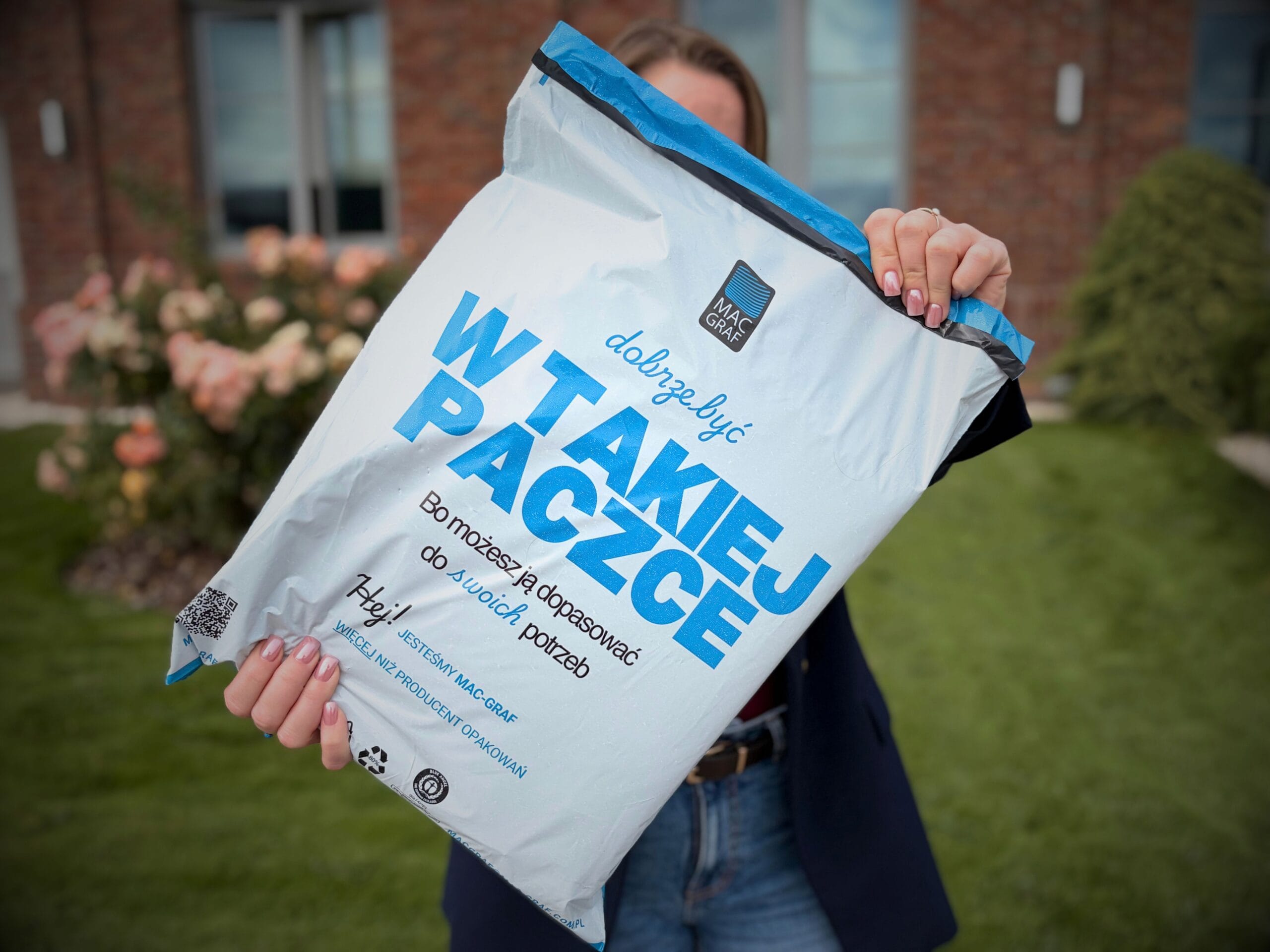
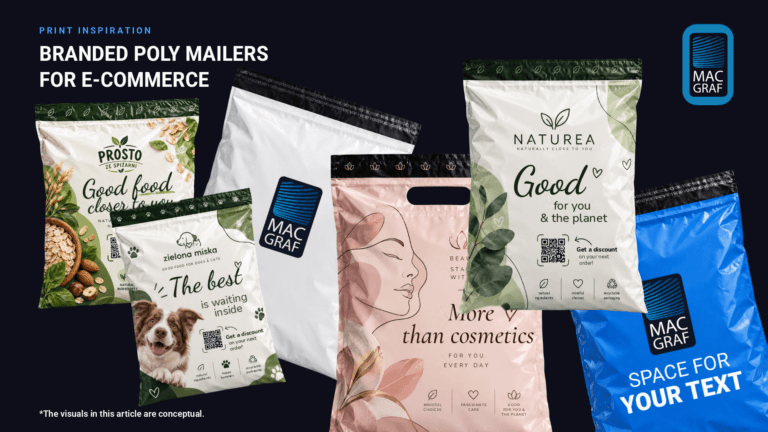
A branded poly mailer is the only part of a shipment your customer sees before they see the product. It’s also usually cheaper per customer touchpoint than a flyer or a freebie tucked into the package. A well-designed print can build brand recognition, collect reviews through a QR code, support seasonal sales, and provide PPWR-compliant recycling information.
It works best in e-commerce, where unboxing is part of the shopping experience: in fashion, cosmetics, food, and supplements.
Why a Plain Poly Mailer Is a Missed Opportunity
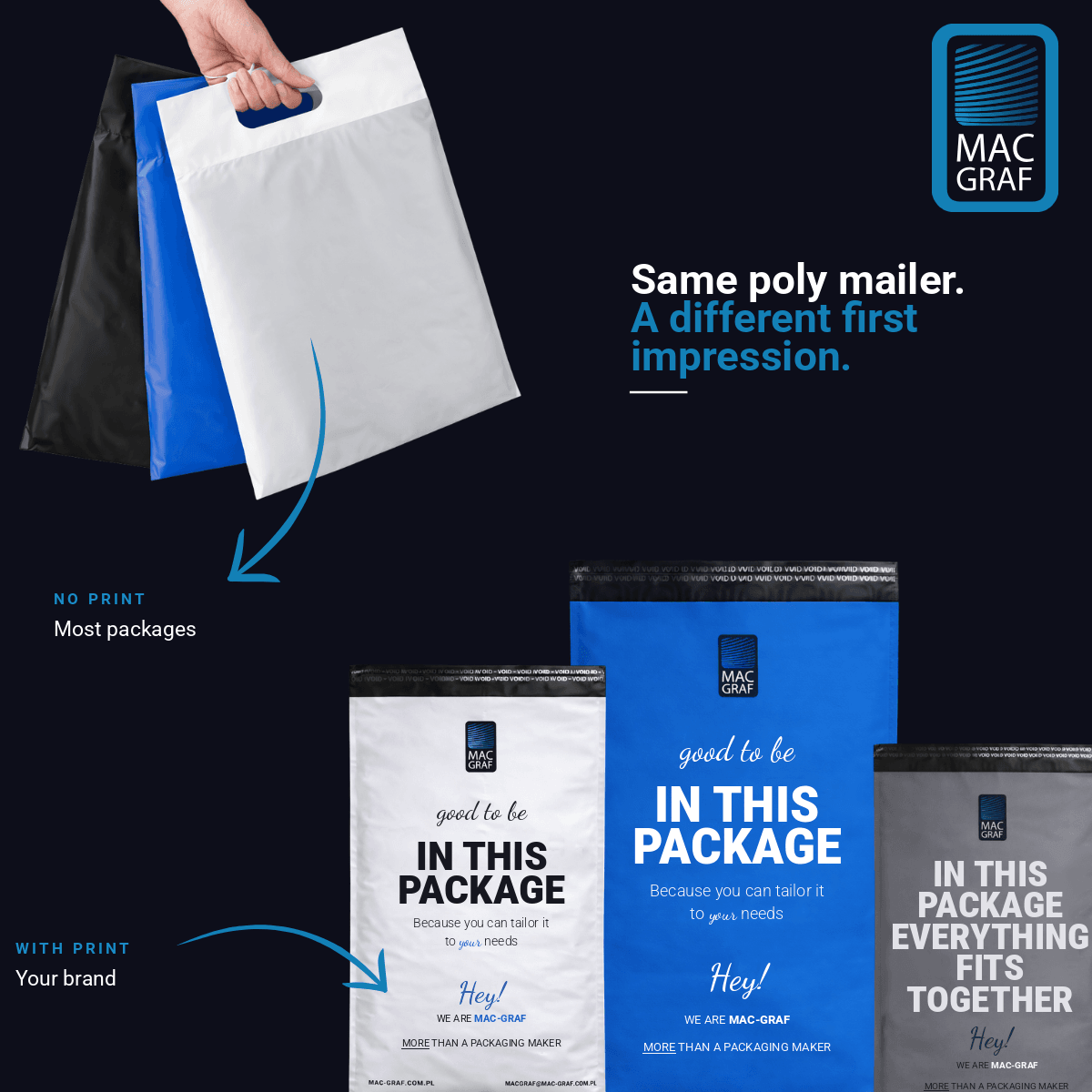
A parcel travels through the sorting facility and the courier’s hands all the way to the parcel locker. It ends up on the customer’s desk or in their hallway. The whole time, all anyone sees is the packaging. A gray or white poly mailer says nothing. A custom printed poly mailer tells everyone who the package is from from the very first second, and it builds anticipation before the customer even opens it.
From a cost perspective, one thing matters: you’re buying the packaging anyway. Printing doesn’t add a new step to the packing process. There’s no flyer to insert and no sticker to apply, so your packing station works at the same pace. The only thing that changes is what the poly mailer does for your brand. If you ship regularly, it’s one of the few communication channels that reaches every customer without any extra work for your warehouse.
The effect also goes beyond the recipient. The package is seen by household members, neighbors, and coworkers at the office. Recognizable packaging often shows up in social media photos. A plain poly mailer doesn’t stand a chance.
Poly Mailer Print Ideas: 5 Proven Scenarios.
1. Logo i hasło marki
This is the simplest and most common option. It works well when your goal is brand recognition. The rule of thumb: less is more. Your logo plus a short slogan. No one is going to read a detailed description of your offer printed on plastic film.
Your slogan doesn’t have to sound like an ad. A line that says something about the customer experience often works better, for example: “Packed in Bydgoszcz – just for you,” “It’s here! The rest is in your hands – scan the QR code and share your thoughts,” “Good things find good hands,” or “The best is yet to come.”
A slogan can keep working after unboxing, too: a short “Unboxed? Now pop me in the recycling bin” on the back tells customers what to do with the poly mailer and shows that your brand cares about the entire life cycle of its packaging.
A good slogan brings together your brand, the package, and the recipient in a single sentence, right at the moment the parcel lands in their hands.
What does this look like in practice? See how InPost uses slogans on its poly mailers:
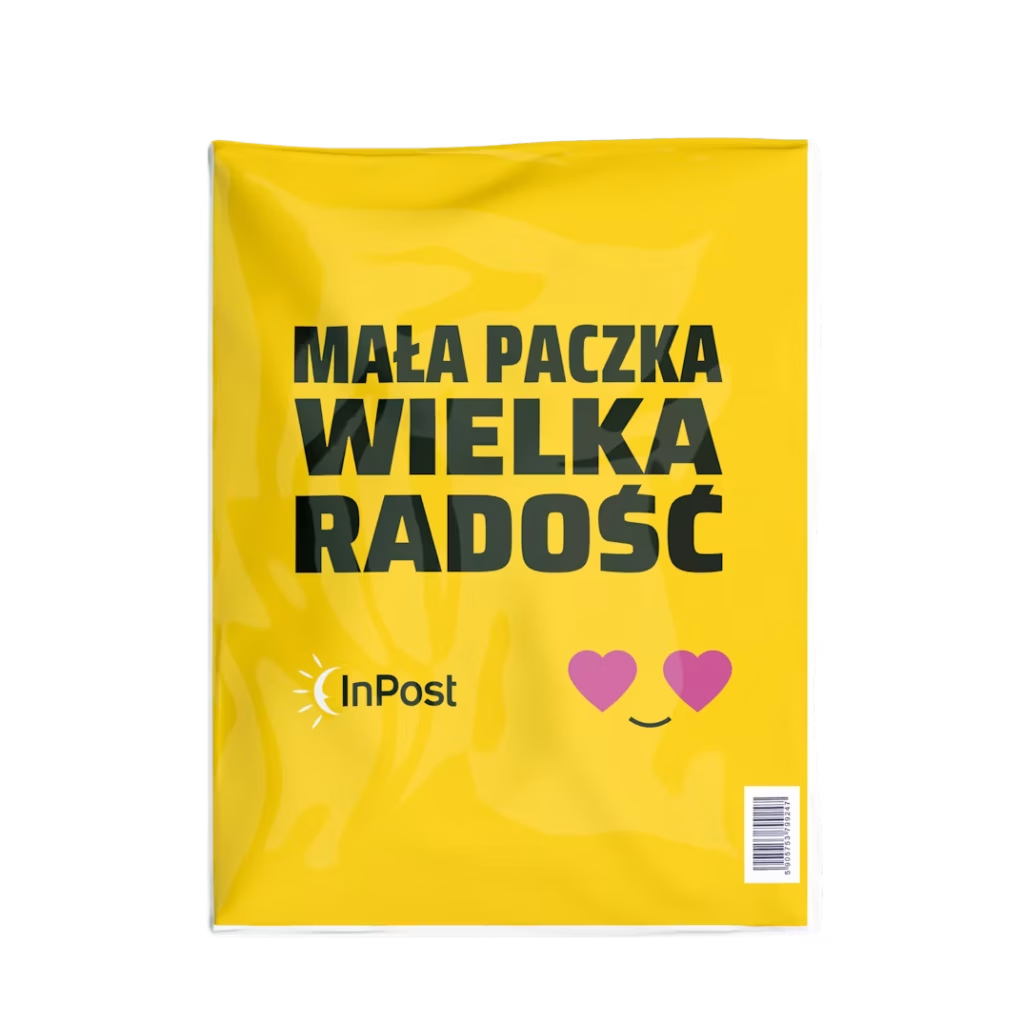
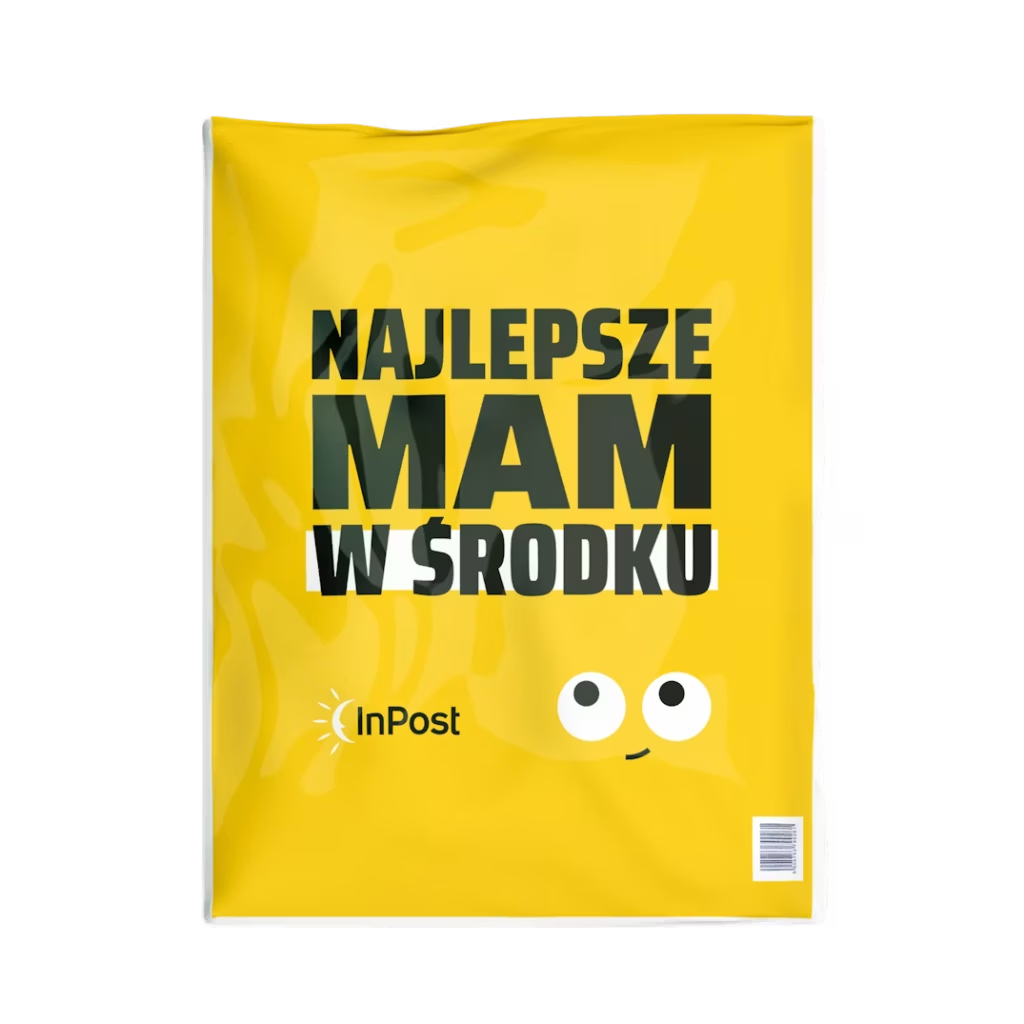
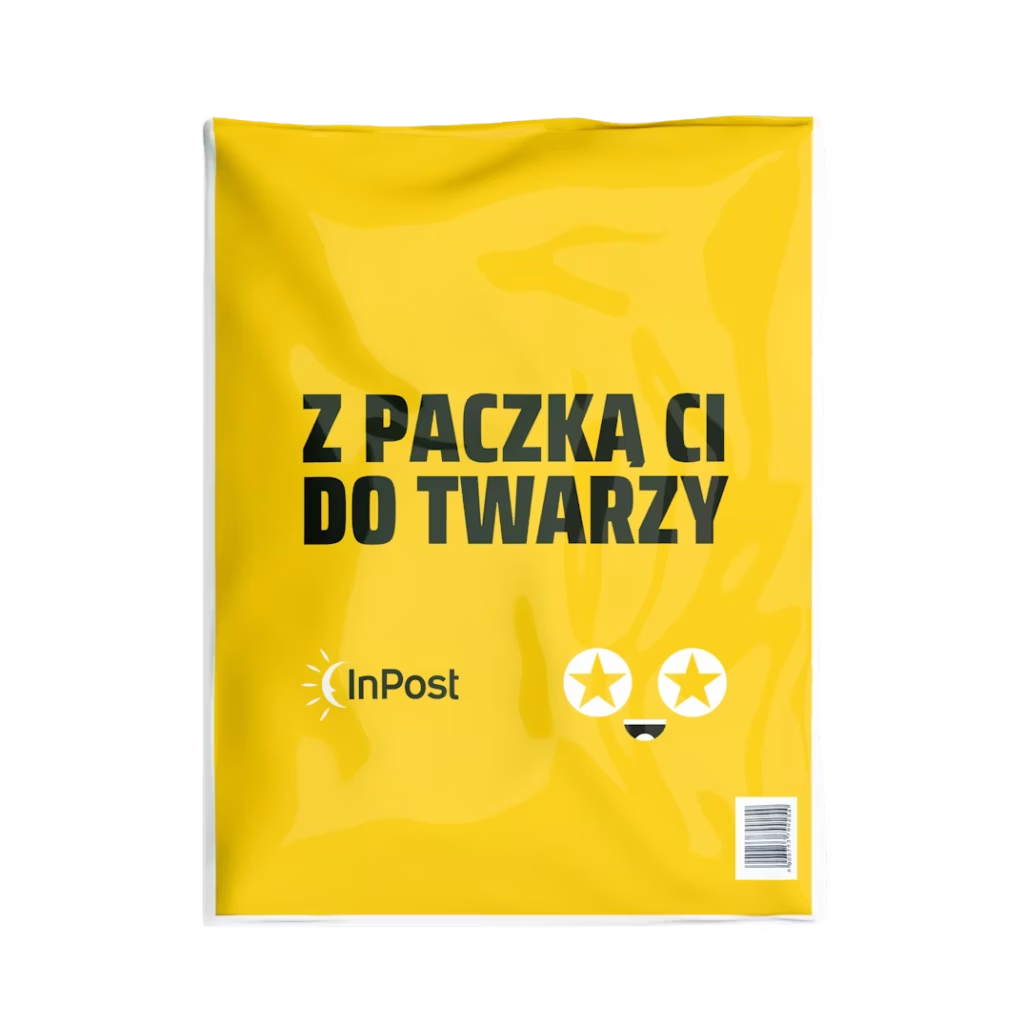
Source:https://opakowania.inpost.pl/pl-pl/p/f2-pre-printed-poly-mailer-inpost?sku=ph-1494-15234&qty=50
2. QR Code: Reviews, Social Media, Instructions
Speaking of QR codes, they turn your packaging into a channel you can measure. The most common destinations are a review request on Google or a marketplace, your social media profile, product instructions, and your returns process.
Three practical tips to help you avoid costly mistakes:
- Use a dynamic QR code. It points to a URL you can change later without reprinting. You can switch stores, campaigns, or review pages, and the poly mailers already in your warehouse keep working.
- Add UTM parameters to the link. Your analytics will show you how much traffic the packaging brings in. That's a solid argument when deciding on your next order.
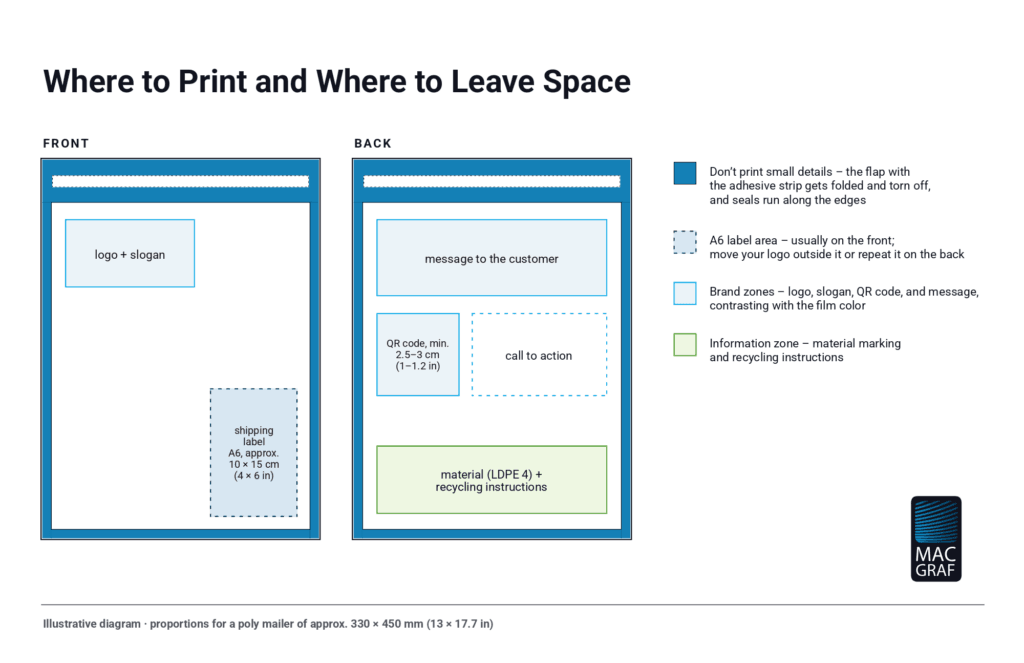
- Test scanning on a filled package, not a flat design. The film curves around the product and reflects light. Your code should have high contrast (dark on a light background), a clear margin around it (the so-called quiet zone), and a size closer to 2.5–3 cm (about 1–1.2 in) than the bare minimum.
A QR code without a call to action rarely gets scanned. A short line like “Scan and rate your purchase it only takes 30 seconds” noticeably increases the chance that customers will scan it.
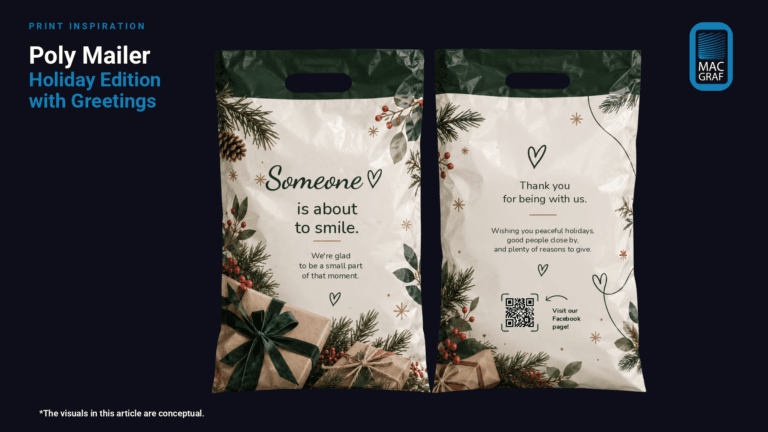
3. Seasonal Design or Limited Edition
A holiday or summer print, or one created for a collection launch, makes a shipment feel special. Customers feel like they’ve received something from a limited series. It’s a good fit for brands with clear sales peaks.
Here, the decision is more about logistics than design. Plan your order quantity around your shipping forecast for that period, because any surplus after the season is stock you won’t use.
Two ways to reduce the risk:
- Don't put a date or year on the print. A "winter" theme instead of "Holidays 2026" can be reused next season, too.
- Combine seasonal and standard poly mailers. For example, use your main logo series all year round and a seasonal one only during peak periods.
4. Material Information and Recycling Instructions
This option combines brand image with regulatory compliance. You can include the material marking on the poly mailer (LDPE, recycling code 4) or a simple recycling instruction.
For example, on poly mailers with a double adhesive strip, the instruction can have two steps: “Keep for returns. When you no longer need it, put it in the recycling bin.”
Behind this is the EU’s Packaging and Packaging Waste Regulation (PPWR). Among other things, it provides for harmonized labeling of packaging material composition, introduced in phases. We cover the timeline and scope of the requirements in our article PPWR: What It Means for Businesses. It’s worth designing your print with future requirements in mind, so you don’t have to change it again soon.
Important: only claim what you can document. Statements like “recyclable” or “contains X% recycled content” must be backed by the material specification. Vague terms such as “eco” or “planet-friendly” don’t build trust and are increasingly becoming a legal issue. EU rules on generic environmental claims are getting stricter right now.
5. A Short Message to Your Customer
A thank-you note, returns information, or an incentive to buy again, for example: “Got a question? Email us at contact@…”. This replaces some of the flyers you’d otherwise tuck into packages, so it also speeds up packing. It works especially well on the back of the poly mailer, which stays in the customer’s hands after opening.
How to Design a Logo on Shipping Packaging So It Stays Visible
The most common mistake isn’t about the graphics. It happens because the designer doesn’t know what the poly mailer looks like in transit.
A checklist before sending your design:
- Leave room for the shipping label. A standard label is A6 size (about 10 × 15 cm, or roughly 4 × 6 in) and usually goes on the front. A centered logo often ends up covered. Plan a clear area for the label on the front, and move your logo elsewhere or repeat it on the back.
Which Industries Benefit Most from Custom Printed Poly Mailers
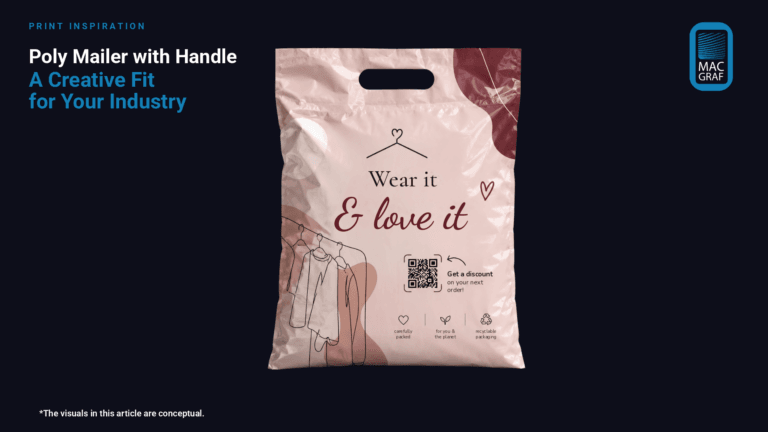
Ideas for using these features, tailored to your industry:
Branded vs. Plain Poly Mailers: What Does It Really Cost?
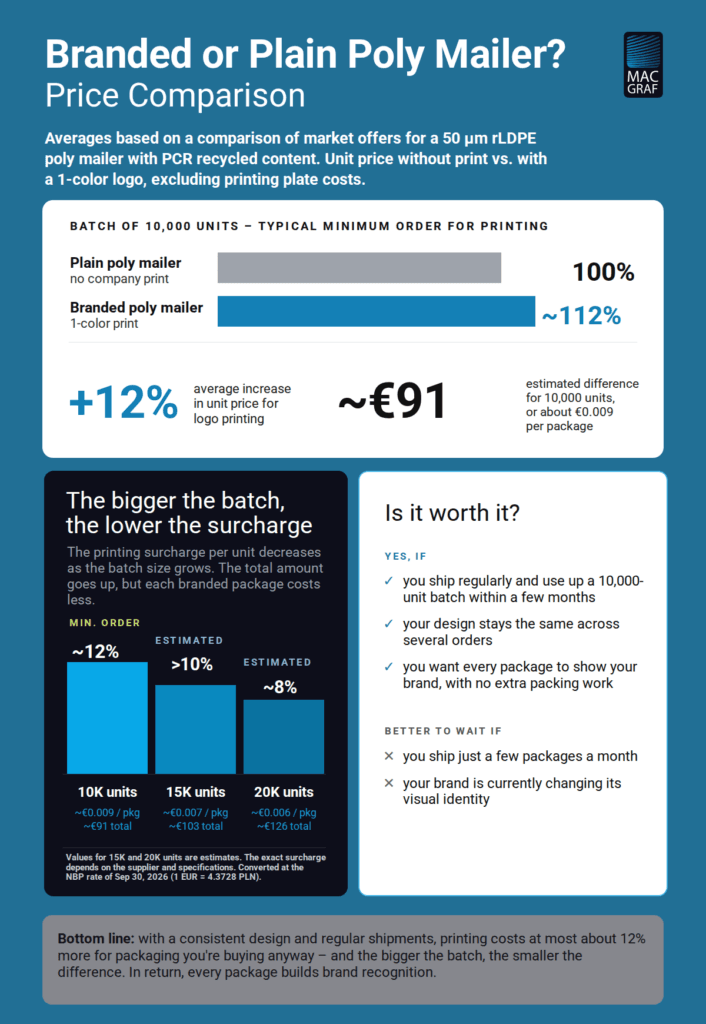
Based on a comparison of offers available on the market, you can assume that a one-color logo print increases the price of a poly mailer by about 12% on average, not including the one-time cost of printing plates. For a batch of 10,000 units, that’s roughly PLN 400 (about €95), or around PLN 0.04 (just under €0.01) per package.
That 12%, however, applies to the smallest typical batch, since 10,000 units is usually the minimum order quantity (wholesale) for printed orders. The larger the order, the lower the printing surcharge per unit.
- As an estimate, at 15,000 units it can drop below 10%, or about PLN 0.03 (under €0.01) per package, and at 20,000 units to around 8%, or about PLN 0.027 (under €0.01) per package. The total surcharge will come to about PLN 450 (about €105) and PLN 550 (about €130), respectively, but each individual branded package costs less.
Printing plates are a separate, one-time cost that usually doesn’t come up again when you reorder the same design.
When Printing Doesn’t Make Sense Yet
To be honest, it won’t pay off for every business. If you ship just a few packages a month, or your brand is in the middle of a visual identity refresh, it’s better to wait. Custom printing requires ordering a larger batch, and a print with an outdated logo quickly becomes a problem. The right time is when you have a stable shipping volume, an established brand identity, and a clear idea of what you want to achieve: brand recognition, reviews, or customer information.
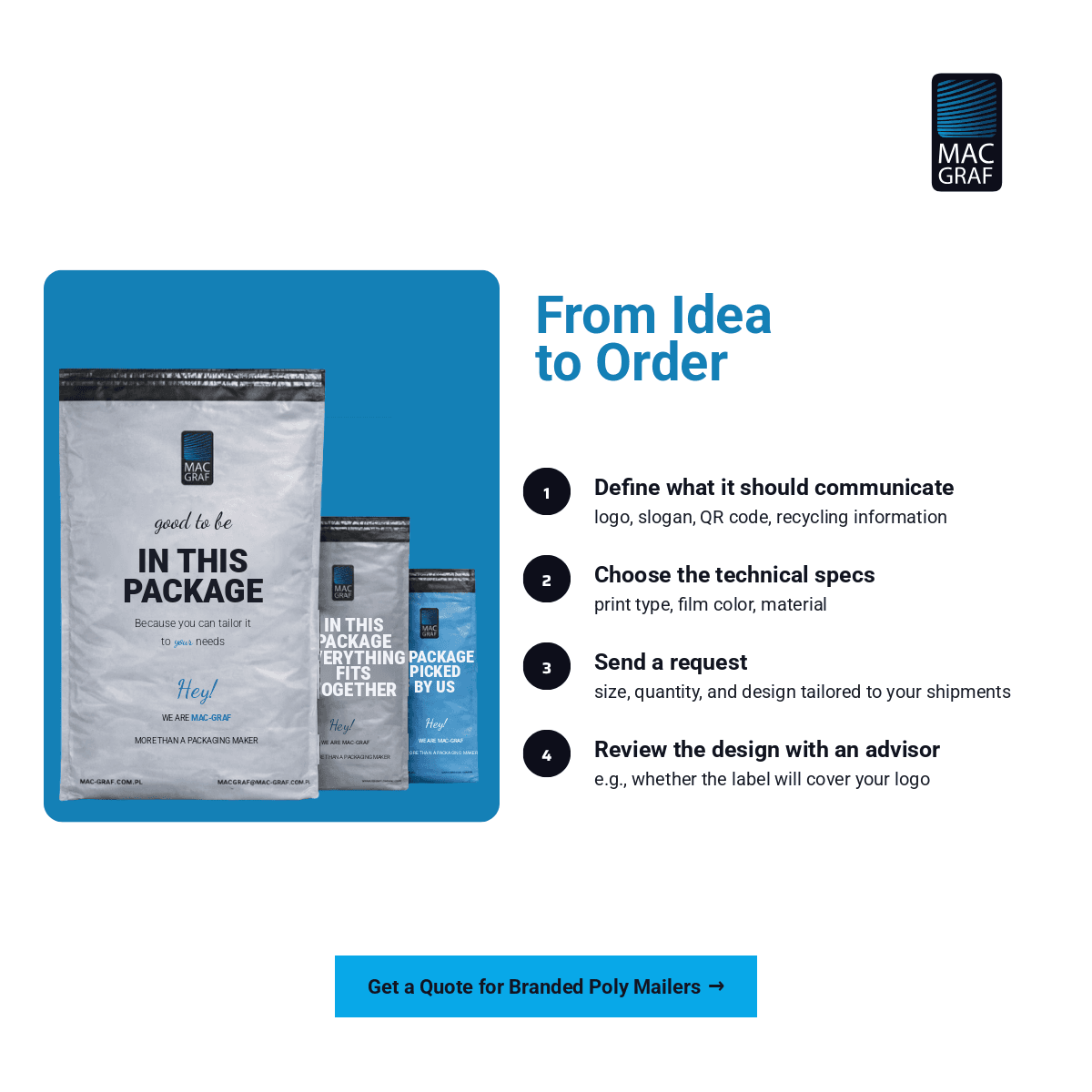
From Idea to Order
Once you know what you want to communicate, the next step is choosing the technical specs: the print type, film color, and material.
We produce custom printed poly mailers based on an individual quote. We tailor the size, quantity, and design to your shipments, and our advisor will help you check whether your design works in practice, for example, whether the shipping label will cover your logo.
The visuals shown are conceptual. Some graphic elements were created using AI tools.
Answers to Frequently Asked Questions – FAQ
Is a branded poly mailer more expensive than a plain one?
Yes, but the difference is smaller than most people assume. Based on a comparison of offers available on the market (September 2026), a one-color logo print increases the price of a poly mailer by about 12% on average, or around PLN 0.04 (just under €0.01) per package for a batch of 10,000 units. It’s worth weighing this against what printing replaces, such as flyers, stickers, and the time it takes to add them, and what it gives you: a touchpoint with every customer without any extra work for your warehouse.
What is the minimum order quantity for custom printed poly mailers?
For wholesale orders, it’s usually 10,000 units. The larger the batch, the lower the printing surcharge per unit. As an estimate, it drops below 10% at 15,000 units and to about 8% at 20,000 units.
What are printing plates, and do you pay for them with every order?
Printing plates are custom-made for a specific design. They’re a one-time cost with your first order and usually don’t come up again when you reorder the same design. However, any change to the artwork means new plates, so it pays to have a design that stays the same across several orders.
What else can you put on a branded poly mailer besides your logo?
Most often, a short slogan, a QR code (for reviews, social media, or instructions), material and recycling information, and a short message to the customer. It’s better to choose 2–3 elements than to use them all at once.
Can a QR code on plastic film be scanned?
Yes, as long as it has high contrast, a clear margin (quiet zone), and the right size. Always test it on a filled package. A dynamic QR code lets you change the destination URL without reprinting, which also means no new printing plates.
Where should you place your logo so the shipping label doesn't cover it
Plan a clear area on the front for an A6 label (about 4 × 6 in), and place your logo outside it or repeat it on the back. The easiest way to check is to hold a 1:1 printout of your design against a filled poly mailer with a label attached.
Does printing affect the recyclability of a poly mailer?
It depends on the choice of materials and inks. Only include claims on the packaging that are backed by the material specification, such as recycled content, and add a simple recycling instruction: “After unboxing, put it in the plastics and metals recycling bin.”
Expert Summary
A branded poly mailer makes sense when you know what role it's meant to play. Brand recognition calls for a simple logo and a slogan that connects your brand with the moment the package arrives. A QR code and a message on the back build your relationship with the customer. Seasonal sales call for a limited-edition design without a date, while accurate material and recycling information supports both PPWR compliance and customer trust. In terms of cost, the decision is simpler than it seems. At the minimum order quantity, printing adds a little over 10% to the unit price on average, and even less for larger batches and repeat orders of the same design. In practice, what makes it effective are the details that are easy to overlook when designing on screen: the shipping label, the seal, contrast on the film, a design that stays consistent, and an order quantity matched to your actual shipping volume. A well-planned print adds no extra work to packing, yet it builds your brand with every package.
A marketing manager and content enthusiast passionate about creating materials that bring real value to the audience. She explores the world of packaging through the lens of actual customer challenges, drawing insights from conversations with business owners, buyers, and warehouse staff alike. Outside of work, she’s a fan of non-fiction books and gravel biking.