
The obligation to hold complete technical documentation for each type of packaging, including verification of heavy metal content (lead, cadmium, mercury, hexavalent chromium).
No more than 50% of the packaging volume filled with air or filler material that does not protect the product.
Ultimately, only packaging with class A or B (above 80% recycling by weight) will be allowed to enter the EU market, assessed in practice rather than only at the design stage. From 1 January 2030, the regulation additionally introduces formal recyclability classes (A–D, with a minimum threshold of 70%), and from 2035 category E for recycling at industrial scale. As part of our preparations for these requirements, we are currently pursuing RecyClass certification, which also covers the assessment of products' recycling capability — its outcome will form the basis for supplementing this statement with the assigned class, sufficiently ahead of this requirement coming into force.
Intended to make correct sorting easier for both consumers and sorting facilities. We currently use on our labels a material designation in line with established market practice (the plastic material code together with the recycling symbol), which serves as the starting point for implementing the new, harmonised labelling. The exact appearance and format of this labelling have not yet been published by the European Commission. We commit to implementing the new labelling in the B2C channel promptly after the relevant implementing act is published and within the timeframe set out by the regulation.
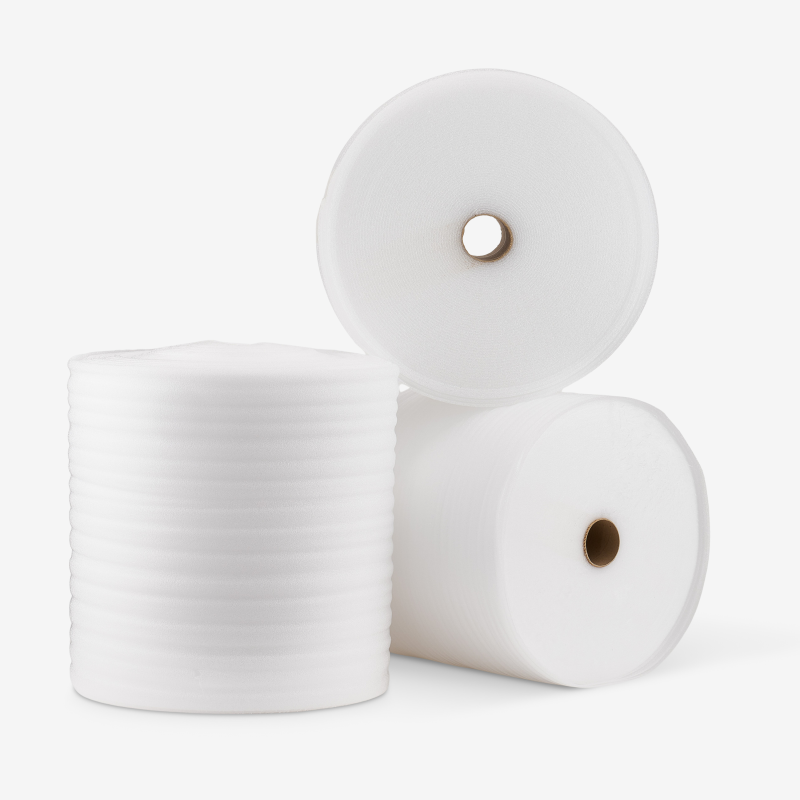
Reduced density – less raw material while keeping the product protected.
View product →95–100% recyclability, confirmed by the Łukasiewicz Research Network.
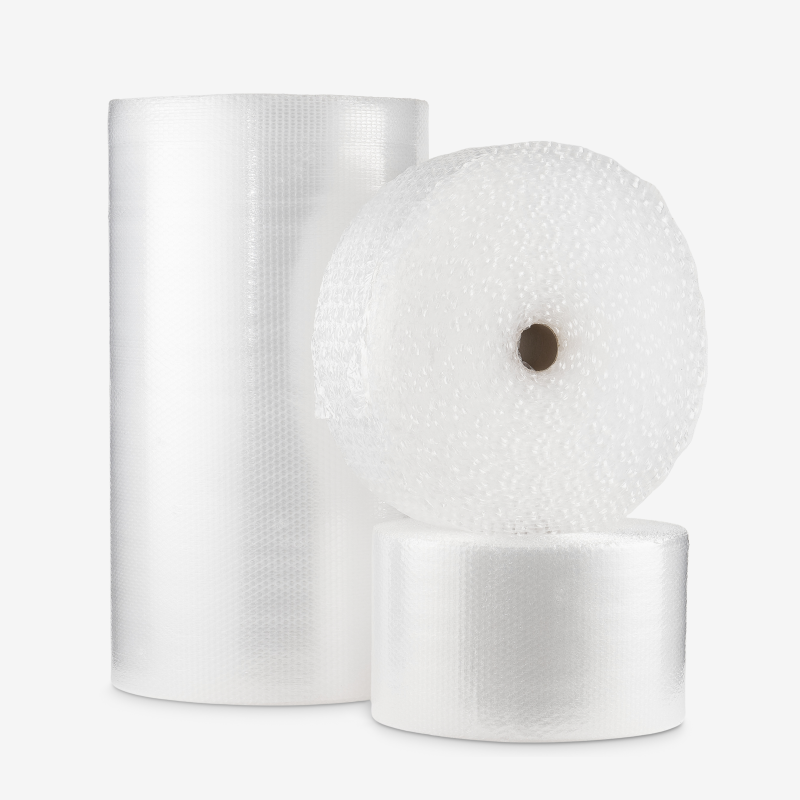
View product →Three times larger bubble – less material for the same fill volume.
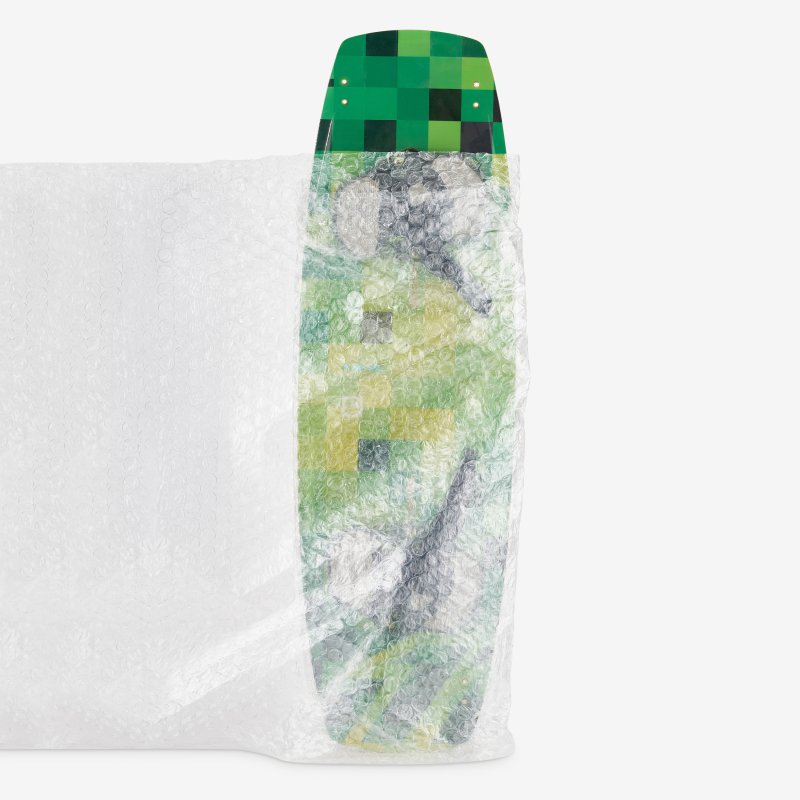
View product →PE foam and bubble wrap fused into a single material – two functions, one stock item.
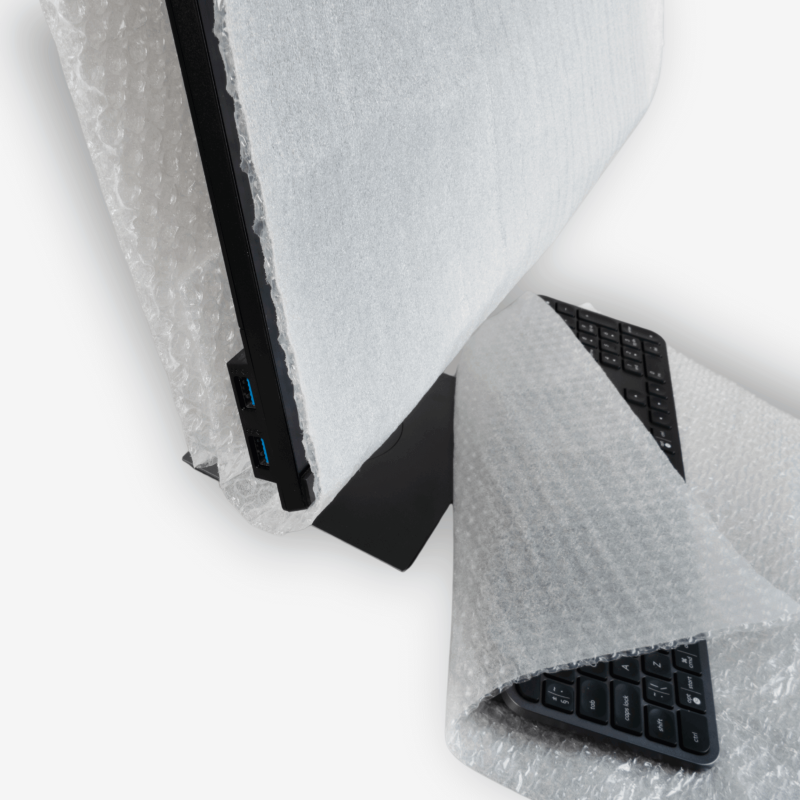
View product →Bags, sleeves, half-sleeves and sheets with no manual trimming at the workstation.
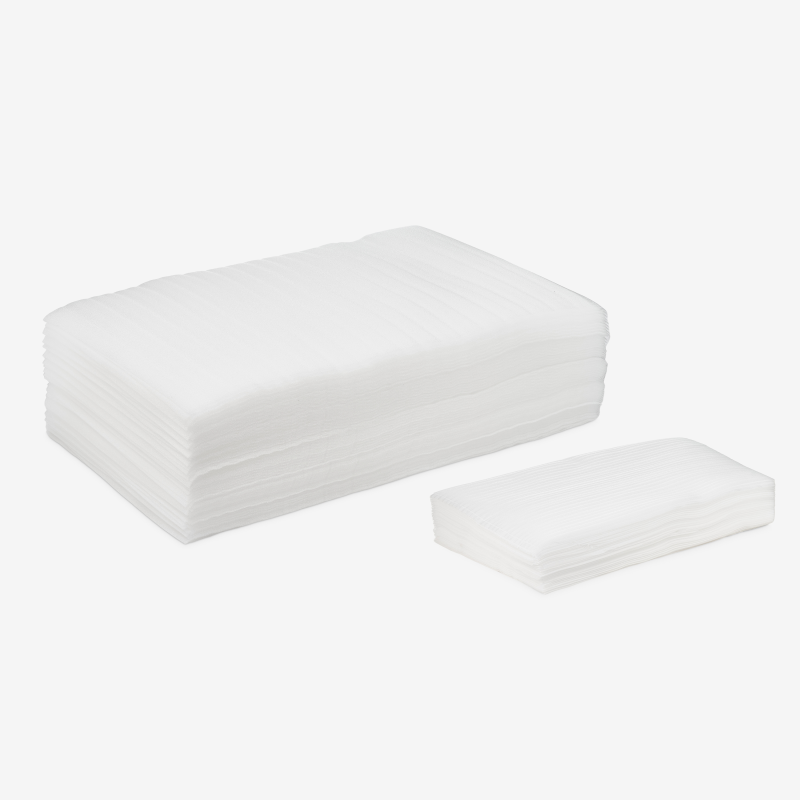
View product →A lightweight, waterproof, mono-material alternative to padded envelopes.
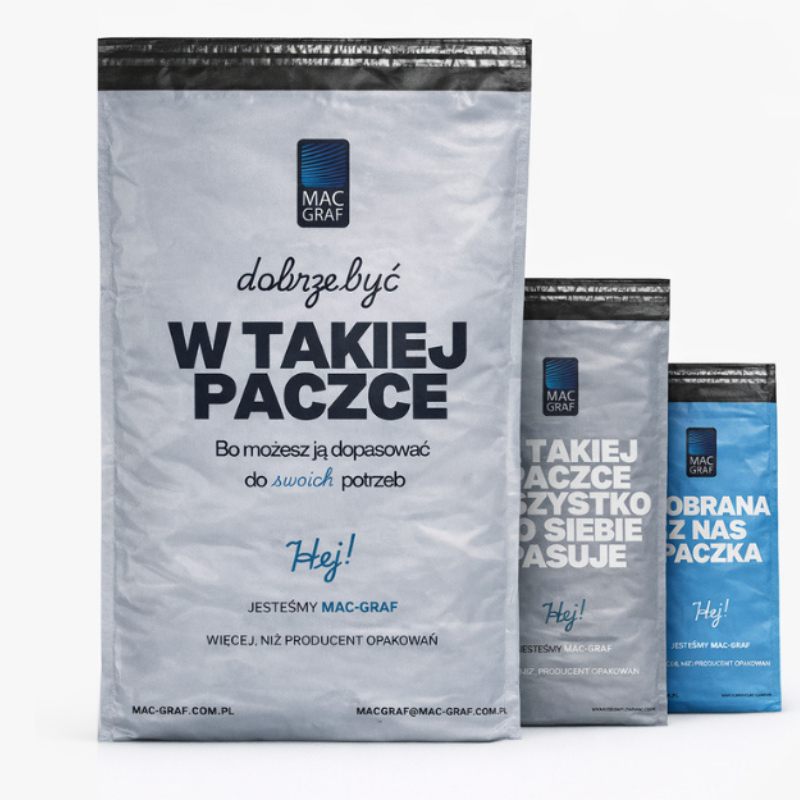
View product →The lightness of a poly mailer and bubble cushioning in one uniform package.
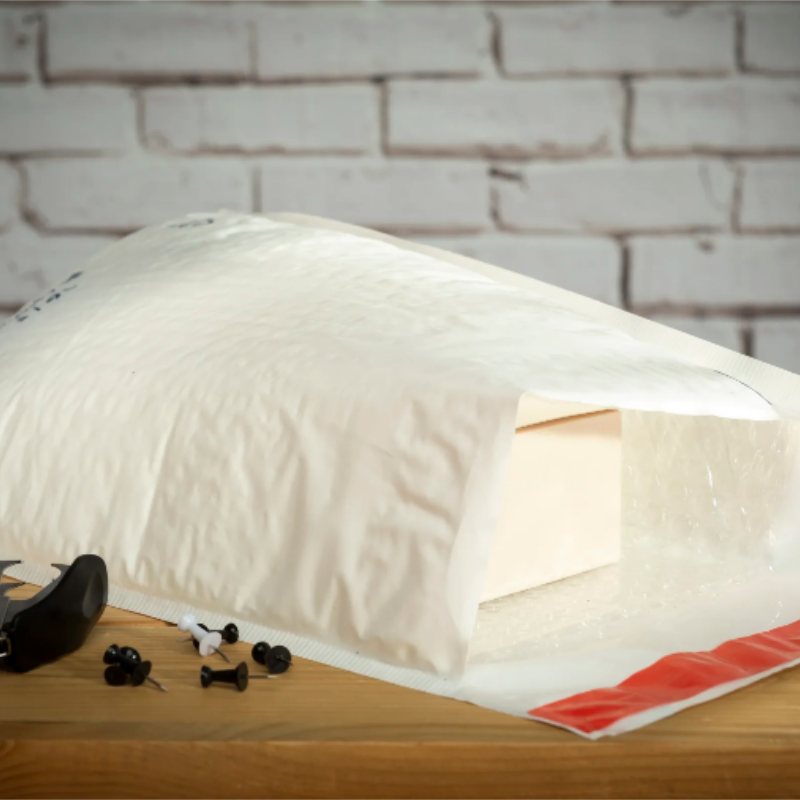
View product →Hold the product securely in the packaging and cushion shocks and impacts.
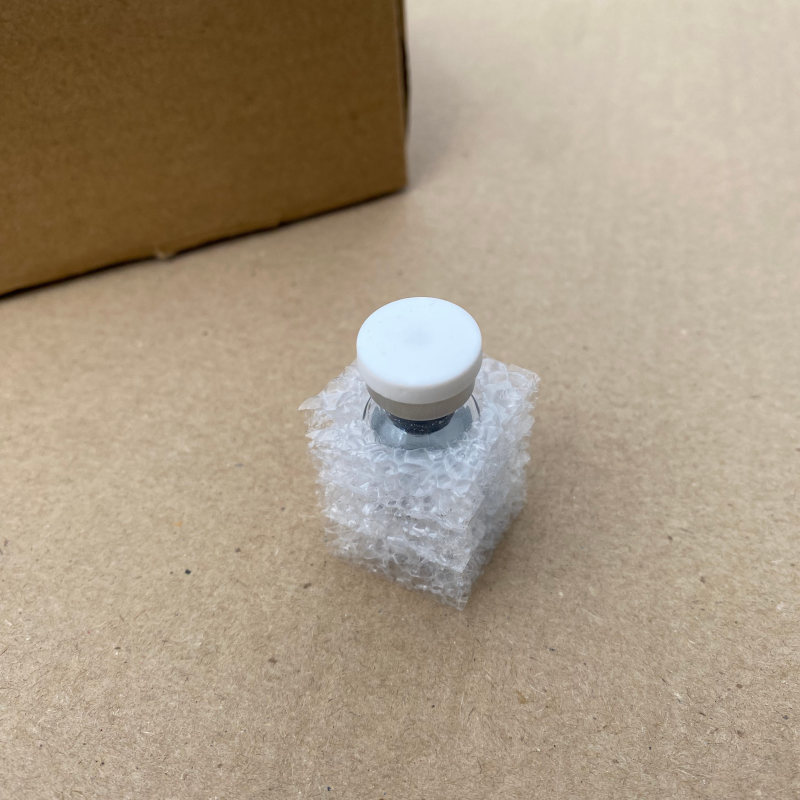
View product →SONG foam is a polyethylene foam with reduced density (15–20 kg/m³), produced by Mac-Graf to protect products in transit while using less plastic. Lower density means less material for the same packaging volume, which directly translates into a lower packaging mass (one of the assessment criteria under PPWR) and a lower so-called plastic tax. It's worth remembering that density mainly accounts for cushioning against single impacts, not resistance to prolonged pressure – when stacking heavy pallets or storing for long periods, it's worth checking with an advisor whether SONG foam is sufficient or whether a higher-density variant is needed.
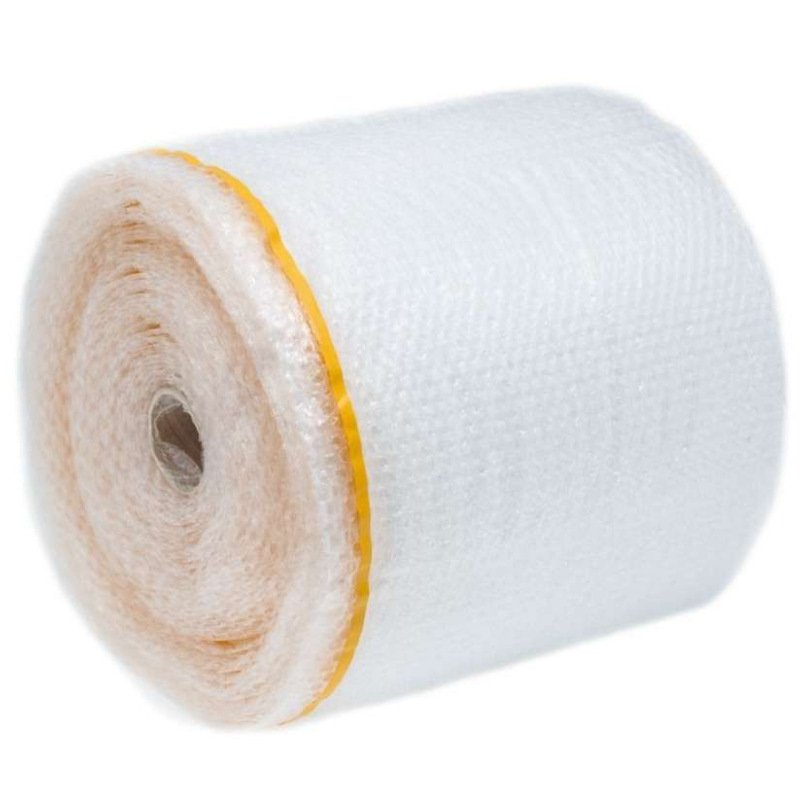
Standard bubble wrap produced by Mac-Graf, together with its converted forms (bags, sleeves, half-sleeves, sheets), achieves 95–100% recyclability (class A), confirmed by the Łukasiewicz Research Network. It works well for packing fragile products (glass, ceramics) and heavy ones (furniture, bathroom fittings), and an antistatic version (pink) is also available for electronics sensitive to ESD discharge.
Fill&Wrap is a bubble wrap variant with a 3 cm diameter bubble – three times larger than in classic film. A bigger bubble means a thicker air cushion that immobilises the product inside the box and fills more volume for the same length of material. In practice this means lower film consumption with the same or better cushioning effect than classic paper filler or standard small-bubble film – and, as a bonus, fewer movements for the warehouse worker when packing each parcel.
Laminate combines PE foam (0.8–5 mm, +/- 3%) with bubble wrap (28–150 g/m²) into a single, fused material – the foam protects the surface from scratching, while the bubbles increase resistance to shock and puncture. For a purchasing department, that's one material instead of two separate layers – meaning one stock item, one order and, importantly for PPWR, one uniform raw material to recycle instead of two different materials joined at the packing stage. A solution proven in practice for packing large, lacquered items (e.g. mannequins, furniture) under repeatable, higher-volume conditions.
Converted products are ready-made packaging forms made to the dimensions specified by the customer – from bubble wrap or PE foam.
A bag or sleeve eliminates the need for manual wrapping and trimming material at the packing station, which shortens working time and standardises raw material consumption (there's no excess from a "just-in-case buffer," which often appears when trimming by hand from a roll).
Sleeves work well for products of similar width but varying length (e.g. skirting boards) – the product goes inside, and the material is only cut to the length needed.
Sheets make it easy to quickly interleave the same sections of material without any need for trimming.
In Mac-Graf customers' practice, converted forms have made it possible to speed up packing by around 30% without investing in automation.
A poly mailer made of LDPE film is a lightweight (a few grams), waterproof and tear-resistant piece of packaging that doesn't significantly add to a shipment's volume or weight. For products that aren't at risk of breaking or bending (clothing, textiles, footwear, stationery), a poly mailer is an economical choice that's also favourable under PPWR – both compared with a carton that has excess empty space, and with a paper envelope with an internal film lining, whose mixed composition makes sorting harder.
Although it might seem that this solution doesn't suit premium brands, for example, that couldn't be further from the truth. You can have a poly mailer printed with a dedicated design, order a version with a handle for easier carrying, and going further still – choose a biocompostable version, which, under the right conditions, breaks down 100% (though it's somewhat more expensive).
A poly bubble mailer combines the advantages of a poly mailer (lightness, water resistance, small storage volume) with an internal bubble layer that cushions shocks. For heavier or higher-value products, an additional PE foam insert inside, or a carton with a fitted insert, is recommended. Because the entire mailer is made of PE, it stays uniform in material – unlike the paper-with-bubble-lining variant popular on the market.
Although the requirement to keep empty space to a maximum of 50% of the packaging volume won't take effect until 1 January 2030 (or 3 years from the date the implementing acts defining the methodology for calculating this ratio enter into force – whichever date is later), it's already worth considering which solutions to adopt in order to meet these requirements.
In industries selling highly sensitive products such as consumer electronics, medical devices, and delicate components, a popular and effective way of protecting products is PE foam inserts/fittings, which immobilise the product inside the box by tightly enclosing it so it can't move, while the foam cushions shocks and impacts. On top of that, it's also recyclable.
A paper envelope with an internal bubble insert made of PE film looks like an eco-friendly solution, because the main raw material is paper. At the sorting facility, however, this packaging is a problem – for it to reach the right stream, someone would have to manually separate the film insert from the paper surface. In the real sorting process, this kind of mixed packaging most often ends up in mixed waste, i.e. outside recycling.
Fully poly packaging – for example, a poly bubble mailer made entirely of polyethylene – is a single material that goes directly into the plastics stream. The bubble wrap and the converted products made by Mac-Graf (bags, small bags, sleeves, half-sleeves, sheets) achieve 95–100% recyclability (class A), as confirmed by the Łukasiewicz Research Network – Łódź Institute of Technology.
Not every material associated with sustainability is actually easier to sort. Material uniformity often produces a better recycling outcome than the intuitive choice of paper.
A second typical mistake is reducing the thickness or amount of protective material in response to cost pressure or the empty-space limit, without checking whether the product is still adequately protected. The effect is the opposite of what's intended: more transit damage means more complaints, more product exchanges and additional return shipments – meaning more packaging and more transport across the whole chain, not less.
One of our clients in the furniture industry spent years protecting products with a material that seemed cheaper but generated higher complaint and returns-handling costs than a more suitable protective material would have.
PPWR does not require giving up product protection – it requires giving up empty space that serves no protective function. A well-chosen cushioning material that fits tightly against the product meets both goals at once – it protects the goods and reduces the share of empty space in the packaging.
The target 50% empty-space limit for grouped, transport, and e-commerce packaging usually runs into two packing practices: a one-size-fits-all carton chosen “by eye” instead of for a specific product, and a filler that takes up a large volume while using very little raw material (paper, bubble wrap, air pillows, wood shavings). In both cases, the solution isn’t more filler, but better-fitted packaging.
Of course, with a large volume of different SKUs sold in various configurations, always fitting the perfectly sized carton without the right systems in place is difficult. In that situation, it may turn out that, wherever possible, a complete switch in packaging — for example from a carton and fillers to poly mailers or poly bubble mailers — will be more effective. An option that, in turn, makes it possible to reduce the amount of packaging material such as fillers used in cartons is converted forms.
Our converted forms – bags and small bags, sleeves, half-sleeves and sheets made to measure from bubble wrap or PE foam – address this problem directly: the product goes straight into packaging with dimensions close to its own, so no empty space is created that needs filling. Where the carton has to be larger than the product (different assortment sizes, standardised carton sizes in the warehouse), a better filler is Fill&Wrap bubble wrap with a 3 cm diameter bubble – the larger bubble takes up more volume while using less film than classic small-bubble wrap, so the same length of material fills more empty space.
An added benefit for procurement and logistics: smaller packaging means less space on the pallet and inside the means of transport, so the PPWR effect (reducing empty space) overlaps here with a purely cost-related effect – a lower transport cost per unit.
| Packaging situation | Apparently "eco" choice | Choice aligned with PPWR logic |
|---|---|---|
| Courier shipment of a small product | Paper envelope with an internal film bubble insert | Poly bubble mailer or poly mailer – a single material, suitable for recycling; a biodegradable variant can be chosen for the poly mailer version. |
| Filling empty space in a carton | Large amounts of crumpled paper or wood shavings | Fill&Wrap film with a large bubble – less material for the same volume. |
| Protecting very delicate items, e.g. vials, medical equipment | Carton + very large amounts of bubble wrap | Carton + a made-to-measure PE foam insert (this solution also works well for transport between company sites, since PE inserts can be reused multiple times). |
Bubble wrap and PE SONG foam manufactured by Mac-Graf meet the requirements of Regulation (EU) 2025/40 on packaging and packaging waste.
Does the packaging consist of a single type of plastic, or several different materials joined together (e.g. paper + film)?
What percentage of the carton's or envelope's volume is empty space that serves no protective function?
Was the thickness and density of the protective material (foam, film) chosen for the actual hazards of the shipping route, or just copied from the previous supplier?
Are there test results available confirming the material's recycling class?
Can the packaging supplier provide an EU Declaration of Conformity and technical documentation on request?
Has switching to a "more eco-friendly" material been tested for actual product protection, not just for how the packaging looks?
No. PPWR assesses packaging based on its actual recyclability, the share of recycled content, and the reduction of empty space – not on the type of raw material. A uniform plastic packaging (e.g. bubble wrap, poly mailers) can achieve a higher recycling class than mixed paper + plastic packaging.
The target 50% empty-space limit for grouped, transport, and e-commerce packaging applies from the target PPWR implementation period (from 2030), while the obligations regarding documentation, declarations of conformity, and material composition already come into force on 12 August 2026. It’s worth starting a packaging audit well in advance, rather than only once the deadline is approaching.
The simplest method is to measure the volume of the carton and the volume of the product itself (or the product with a minimal protective layer), and then compare the difference. If the difference exceeds half the carton’s volume, it’s worth looking into a smaller carton size or converted packaging matched to the product instead of a one-size-fits-all box.
No – it works well where the priority is cushioning against single impacts and a low packaging weight. Under prolonged pressure (stacking heavy pallets, storage lasting several months), it’s worth checking with an advisor whether a higher-density foam is needed.
Not always – made-to-measure converted packaging and fillers like Fill&Wrap usually reduce material consumption and shorten packing time, which lowers operating costs. Costs can rise where the existing packaging was underspecified relative to the real risk of damage – in that case, the increase in material cost is usually lower than the previous cost of complaints.
The 100% recyclability of our products has been confirmed by testing carried out by COBRO – the Packaging Research and Development Institute. Documentation from the study is available on request.
Material code: 04 – LDPE (low-density polyethylene), in line with the commonly used designation for this type of plastic.
It’s worth emphasizing that this also applies to the Laminate – despite a name suggesting a combination of different materials, this product is made by joining bubble wrap and PE foam through thermal welding, without the use of adhesives or other bonding substances. Because both layers are polyethylene-based, the product retains material uniformity and remains compatible with the standard PE recycling stream, unlike typical laminates that combine different types of plastic or non-polyolefin materials, which make recycling harder.
From 1 January 2030, the regulation additionally introduces formal recyclability classes (A-D, with a minimum threshold of 70%), and from 2035 category E for recycling at industrial scale. As part of our preparations for these requirements, we are currently pursuing RecyClass certification, which also covers the assessment of products’ recycling capability – its outcome will form the basis for supplementing this statement with the assigned class, sufficiently ahead of this requirement coming into force.
Schedule a call with our advisor
Want to check whether your packaging process could be optimised by switching packaging materials or using the right tools?
Leave your contact details, and our advisor will call you to discuss your needs and the possibilities for working together.
"The scale of shipments is often so large that the potential savings at this stage of the process amount to significant sums that can be put towards growing the business."