

Void filling is a critical element in packaging highly fragile products, such as glass or electronic components. There are many options available, but production and warehouse managers often choose between PE foam inserts and polystyrene inserts. Both solutions are effective, but they differ in characteristics, which determines their cost-effectiveness in specific scenarios. It is worth carefully reviewing the advantages and disadvantages of each before making a decision, as unit price is only one of many factors to consider.
Polystyrene (EPS) – rigid protection at a low cost
Polystyrene is a closed-cell material composed of approximately 98% air. Its key characteristic is the lack of shape memory.
Advantages of polystyrene in packaging:
For countries separated from continental Europe by sea, the IMDG Code is also applied, defining the rules for international maritime transport.
- Lowest purchase cost – for large production volumes, EPS inserts are unmatched in terms of price.
- Excellent thermal insulation – crucial in the food and medical industries.
- High compression resistance – идеально stabilizes heavy items (household appliances, electronics) inside the carton.
Disadvantages of polystyrene:
- Brittleness – after a single strong impact, the structure cracks and loses its protective properties (single-use material).
- Logistics and storage – polystyrene inserts generate dust, which can be problematic in clean warehouse environments.
- Mold cost – producing custom inserts requires expensive molds, which makes it uneconomical for small production runs.
Polyethylene Foam (PE) – a flexible and reusable material
PE foam is a much denser and more resilient material. Unlike polystyrene, it can absorb impact and return to its original shape.
Advantages of PE foam inserts:
- Repeated shock absorption – ideal for premium products and electronics that may be exposed to multiple impacts during courier transport.
- Dust-free and clean finish – the material is smooth, clean, and safe for delicate surfaces (e.g. lacquered furniture fronts).
- Design flexibility – cutting methods (plotter cutting, die-cutting) allow for short production runs without the need for costly molds.
Disadvantages of PE foam inserts:
- Higher unit cost – the raw material and production process are more expensive compared to EPS.
- Lower rigidity – for very heavy items, low-density foam may compress fully (“bottom out”), reducing its protective performance compared to rigid polystyrene.
| Feature | Polystyrene (EPS) | PE Foam |
|---|---|---|
| Shape memory | None (permanent deformation) | High (returns to original shape) |
| Moisture resistance | Moderate (absorbs moisture over prolonged exposure) | Very high (fully water-resistant) |
| Dust generation | Yes (requires workstation cleaning) | No (clean working environment) |
| Implementation cost | High (mold/tooling cost) | Low (plotter cutting / die-cutting) |
| Application | Heavy, single-use products | Fragile products, multiple impacts |
Where should you use PE foam and where EPS?
Choose polystyrene (EPS) if:
- you produce a single, repeatable product model in high volumes (thousands of units);
- you ship heavy, bulky items (e.g. refrigerators, washing machines, boilers);
- the product is sensitive to temperature changes;
- your budget for unit packaging is highly constrained.
Choose PE foam if:
- you ship high-end electronics, optical equipment, or musical instruments;
- you produce short runs and want to avoid investing €5,000–€10,000 in polystyrene molds;
- you care about a premium unboxing experience – your customer doesn’t want to clean up white foam particles from their carpet.
- you store components in a returnable system (PE foam can withstand dozens of transport cycles).
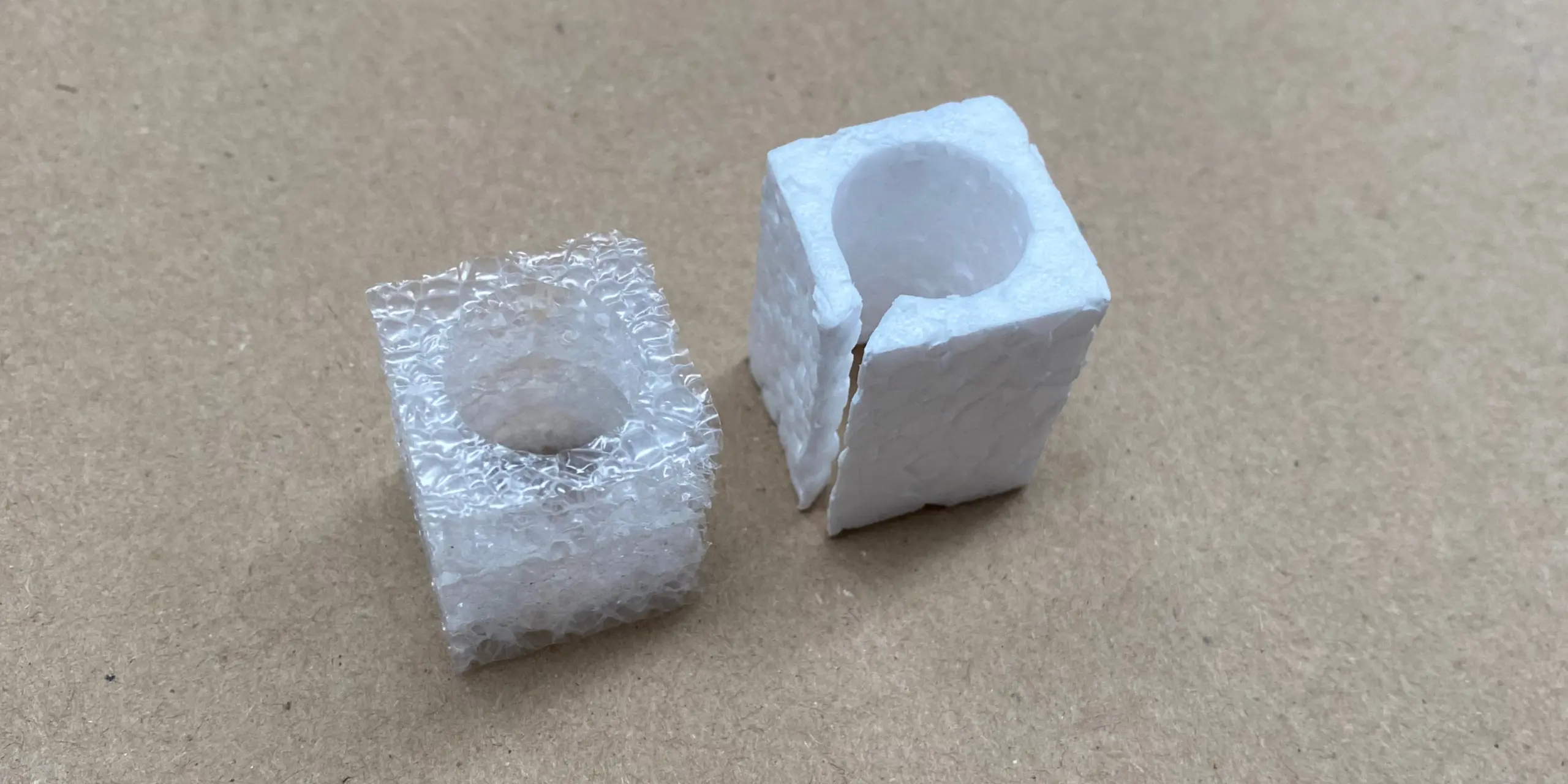
CASE STUDY – replacing EPS with PE foam in the health & beauty industry
- small polystyrene inserts were prone to crumbling, which created challenges both during the packing process and in storage;
- the inserts were rigid, which made them difficult to insert and especially to remove from the carton.
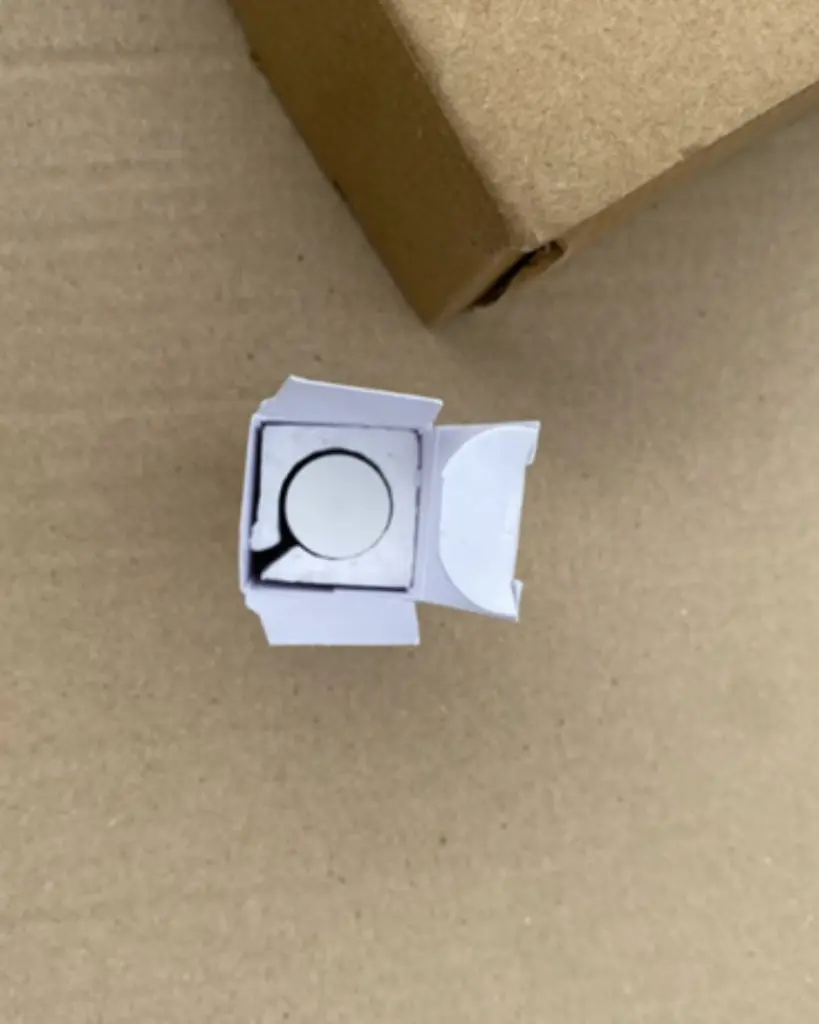
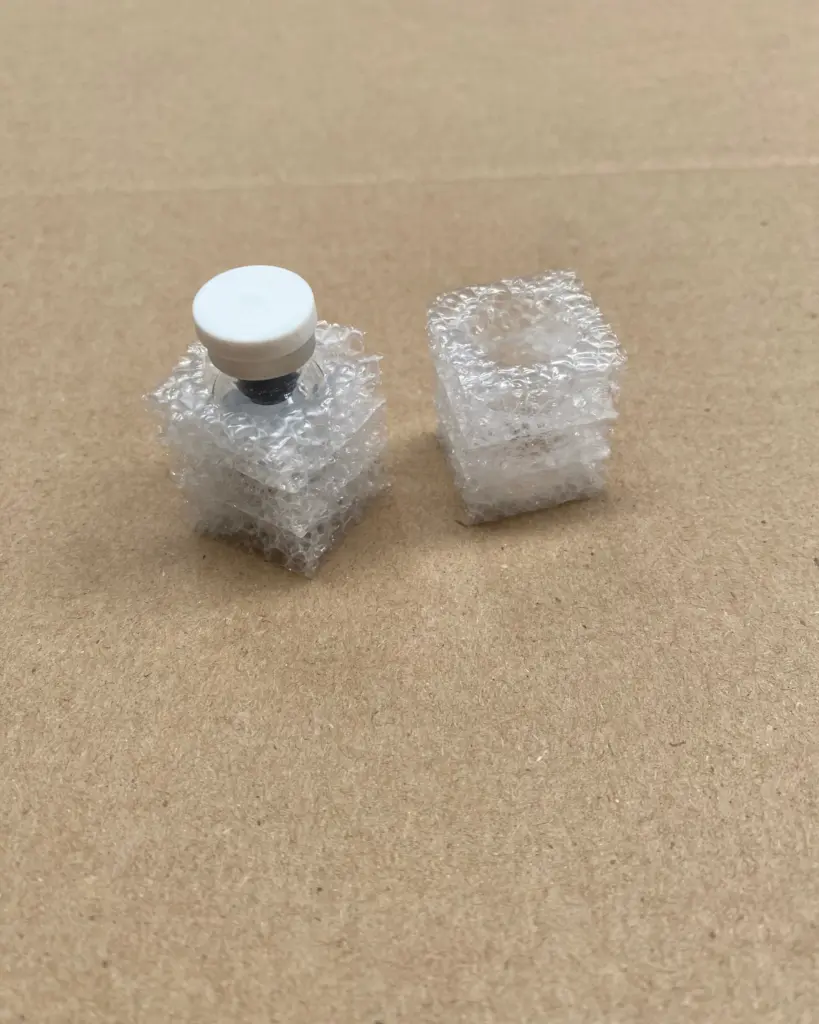
We recommended that the client test PE foam inserts, as:
- the foam is flexible, yet quickly returns to its original shape, making it easier to insert the insert into the box and remove it;
- the structure and cleanliness of the foam mean it does not crumble or generate dust;
- greater resistance to compression and impact makes PE foam inserts easier to store.
This simple change made the packaging process faster and reduced material waste.
Summary and final recommendation
If your priority is cost at a very large scale, choose EPS. However, if claim costs due to damage are increasing despite using polystyrene, switching to PE foam with the appropriate density may actually lead to savings—reducing return rates by up to 15–20%.

Specializing in the sales of PE foam and bubble wrap, he effectively addresses the needs of clients in the packaging industry. With years of experience, deep market knowledge, and strong negotiation skills, he creates tailored offers and builds long-term business relationships. Outside of work, he’s passionate about basketball — a sport that has taught him the value of teamwork and consistency in achieving goals.