
'/%3E%3C/svg%3E "Health & Beauty sector – transport packaging")


Call us
+48 603 234 399
Health & Beauty sector – transit packaging
In Brief Read this if you have less than 2 minutes
- → The choice of transit packaging in the Health & Beauty sector depends on four variables: product fragility, the presence of ESD-sensitive electronics, unit value, and shipment volume.
- → Glass-packaged cosmetics and medical devices are most effectively protected by custom-milled fittings and inserts made of EPE or XPE foam – they immobilise the product and eliminate the risk of damage in transit.
- → Devices containing electronics (cosmetic lasers, EMS devices, dermatological equipment) require antistatic ESD foam – standard white PE foam can permanently damage an integrated circuit.
- → E-commerce cosmetics up to approx. 1 kg often do not require a cardboard box – a poly bubble mailer or polythene mailing bag is lighter, more cost-effective, and better meets the PPWR requirement on void fill within a parcel.
- → Pre-cut packaging (bags, sheets, and sleeves made from bubble wrap) can speed up the packing process by approx. 30 % without any investment in automation.
- → PPWR applies from 12 August 2026 – every packaging item must be accompanied by a declaration of conformity, be technically recyclable, and from 2030 contain no more than 50 % void space.
Full details on each of the above points can be found further in the article. Have a question about a specific product? Book a consultation with a Mac-Graf adviser – free of charge.
Packaging solutions tailored to your brand
- consistent supply, ISO certification (9001, 14001, 45001),
- material compliance with REACH and RoHS directives,
- reduced packing times through the use of pre-cut packaging,
- support in preparing for the PPWR Regulation (recyclable packaging, minimising empty space in parcels).
Abbreviations explained
- EPE
- Expanded polyethylene foam with a closed-cell structure. A lightweight, flexible, and moisture-resistant protective material used, amongst other applications, to safeguard products during transit and storage.
- XPE
- Cross-linked polyethylene foam with greater mechanical strength and superior insulating properties compared to standard EPE. It offers increased durability, a smooth surface finish, and high resistance to compression.
- PCR
- Post-consumer recycled material – material that has previously been used by end consumers and subsequently reprocessed for use in the manufacture of new packaging or other products.
- ESD
- Electrostatic discharge protection. ESD materials prevent the build-up and uncontrolled release of electrostatic charges, thereby protecting sensitive electronic components from damage.
How to choose the right transport packaging for a cosmetic or medical product?
Choosing the right transport packaging in the health and beauty sector is not just a question of aesthetics, but also of product safety, returns costs, regulatory compliance and brand image during unboxing. The following guide will help you make this choice step by step.
Step 1 – Assess the product’s sensitivity
1. Is the product fragile or prone to deformation?
Glass ampoules, vials, pipettes, cosmetic lasers – each of these products requires a different level of cushioning.
2. Does the product contain electronics or components that are sensitive to electrostatic discharge (ESD)?
Mesotherapy devices, electrostimulators, cryotherapy devices and other equipment with electronic control modules require antistatic foam or ESD film. Standard PE foam can generate electrostatic charges when in contact with electronics, which can damage sensitive circuits.
3. What is the value of the product, and what level of risk of damage is acceptable?
For products valued at over PLN 500 per unit, it makes more economic sense to use CNC-machined moulded parts than loose packing material. The cost of a moulded part ranges from a few to several euros; the cost of a single return or complaint is many times that amount.
4. How many packages leave the warehouse each day/month?
If the volume exceeds 200 parcels per month, it is worth considering ready-made moulded trays. Below this threshold, moulded parts cut to size from sheets or self-adhesive bubble wrap are suitable.
Step 2 – Choose the right protective material
Protective material selection Step 2 – choose the right packaging for your product
| Scenario | Recommended material | Why? |
|---|---|---|
| Heavy medical equipment, device ≥ 2 kg | CNC-milled XPE foam insert | High density, secure immobilisation, no particle shedding |
| Lightweight premium cosmetics, glass bottles | EPE foam insert or self-adhesive bubble wrap | Soft cushioning, attractive presentation on opening |
| Medical electronics, sensors, modules | Antistatic PE foam (pink or black) | ESD protection, eliminates electrostatic charge |
| E-commerce – cosmetics up to 1 kg | Polythene mailing bag or poly bubble mailer | No cardboard box required, lower shipping cost, reduced weight |
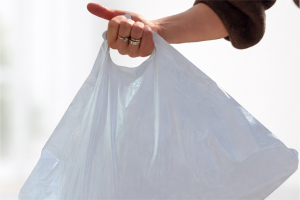
| Returns and collection-point pick-ups | Mailing bag with handle | Customer convenience, neat unboxing experience |
| Confidential medical documentation | Tamper-evident security bag | Cannot be opened without leaving visible evidence of tampering |
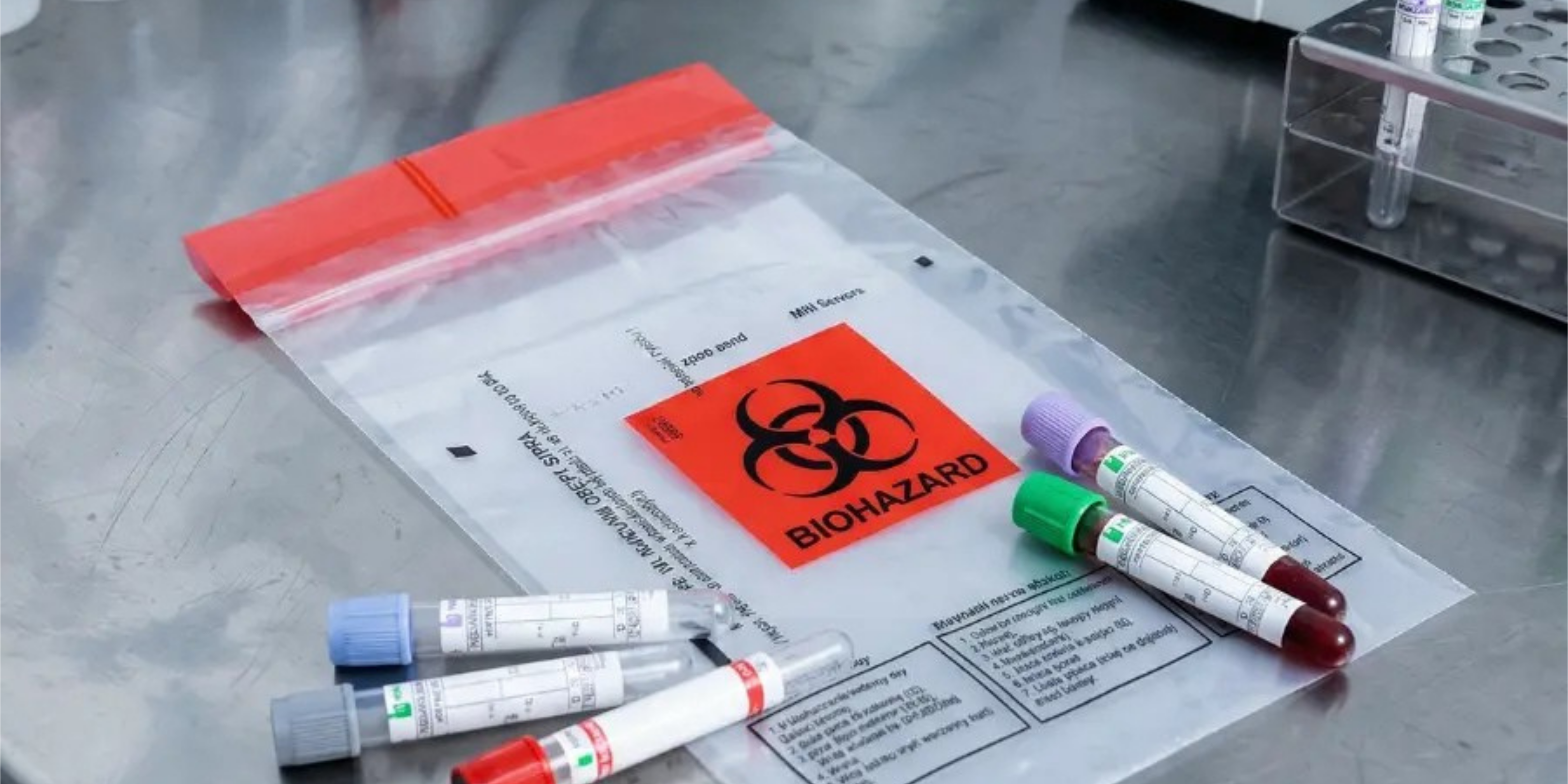
| Infectious medical waste | BIOHAZARD bag | Statutory requirement, safety standards compliance |
← scroll to view the full table
Step 3 – Check compliance with the PPWR and recyclability requirements
- The amount of empty space in the parcel must not exceed 50% of the parcel’s volume.
- Packaging must be recyclable or contain a certain proportion of post-consumer recycled material (PCR).
- Packaging manufacturers must be able to document the material composition.

Product range for the Health & Beauty sector
Custom-made PE foam (EPE / XPE) mouldings and inserts
Polyethylene (PE) foam is the predominant material used for transporting sensitive products in the Health & Beauty sector. Its popularity stems from a unique combination of properties: it does not produce dust, does not crumble, is resistant to moisture and chemicals, and, above all, can be CNC-machined to millimetre precision.
- Applications: Mounting sensors, medical lasers, glass ampoules and cosmetic palettes.
- Properties: The foam does not produce dust, does not crumble and is resistant to moisture and chemicals.
- The anti-static version protects sensitive electronics in medical devices from ESD discharges.
Would you like to test PE moulded parts? Our consultants will put together a bespoke quote for you. Send us a sample of your product and we will design a finished prototype of a protective insert.
What is the ordering process for a custom-made moulded part? (Step-by-step guide)
- Send us a product sample or a 3D model (.STEP/.STL file). A standard courier delivery containing the product is sufficient. Our experts will assess the geometry and recommend the most suitable material.
- You will receive a custom insert design that takes into account assembly tolerances, service access points and the possibility of reusing the packaging multiple times.
- You approve the prototype. We will send you a physical prototype that you can test under real-world transport conditions.
- We are starting series production. Minimum order quantities depend on the complexity of the design – please contact us to discuss the cost-effectiveness of your order based on your shipment volume.
ESD anti-static foam – when is it essential, and what are the risks of not using it?
Many companies in the medical sector use standard white PE foam for packaging electronics because it is cheaper. The problem becomes apparent after a few weeks or months, when the customer reports a fault with the device immediately after unpacking it – a classic sign of ESD damage.
When is antistatic foam required:
- laser biostimulation equipment,
- muscle electrostimulation devices (EMS/TENS),
- dermatological diagnostic devices with a camera and a digital module,
- skin measurement sensors, moisture level monitors,
- mesotherapy equipment with electronic controls.
Polythene mailing bags in cosmetic e-commerce – when to do away with the cardboard box?
Rising material costs and shipping charges for individual SKUs mean that buyers are increasingly looking for an alternative to the traditional cardboard box and packing material. In many cases, courier envelopes are not only cheaper, but also … more environmentally friendly.
When a polythene mailing bag replaces the cardboard box – case studies from the cosmetics sector
Case 1: Serum in a 30 ml glass bottle, shipped individually
→ Traditional solution: Cardboard box 120×80×80 mm + a piece of bubble wrap + adhesive tape = total weight of the packaging ~80 g, packing time ~45 seconds.
→ Solution using a postal envelope: Bubble envelope 120×175 mm = total weight of packaging ~25 g, packing time ~15 seconds.
→ Weight saving: 55 g × number of parcels per month. With 1,000 parcels per month, that’s 55 kg less weight for the courier.
→ PPWR requirements: no empty space, minimal packaging weight.
Case 2: Large cosmetic sets packed in product boxes
→ Traditional solution: Sets packed in an additional outer box (+ tape and sometimes padding in the form of bubble wrap if the box wasn’t completely full).
→ Solution with a shipping bag: A shipping bag made from a high proportion of recycled plastic, with a handle at the top.
→ Advantages: The shipping bag with a handle allows customers to take their purchases straight from the collection point – without needing an extra carrier bag, which is particularly important for larger items. The shipping bag protects against moisture and dirt, yet is lightweight and more cost-effective than packing products in cardboard boxes (especially as it is difficult to keep a suitable box in stock for every size).
→ Risk: The shipping bag does not protect against heavy impacts. If your customers frequently order gift sets and the packaging is susceptible to damage, you should carry out tests and assess the potential number of complaints before implementing this solution.
Compostable and PCR polythene mailing bags – a case for premium branding, not just sustainability
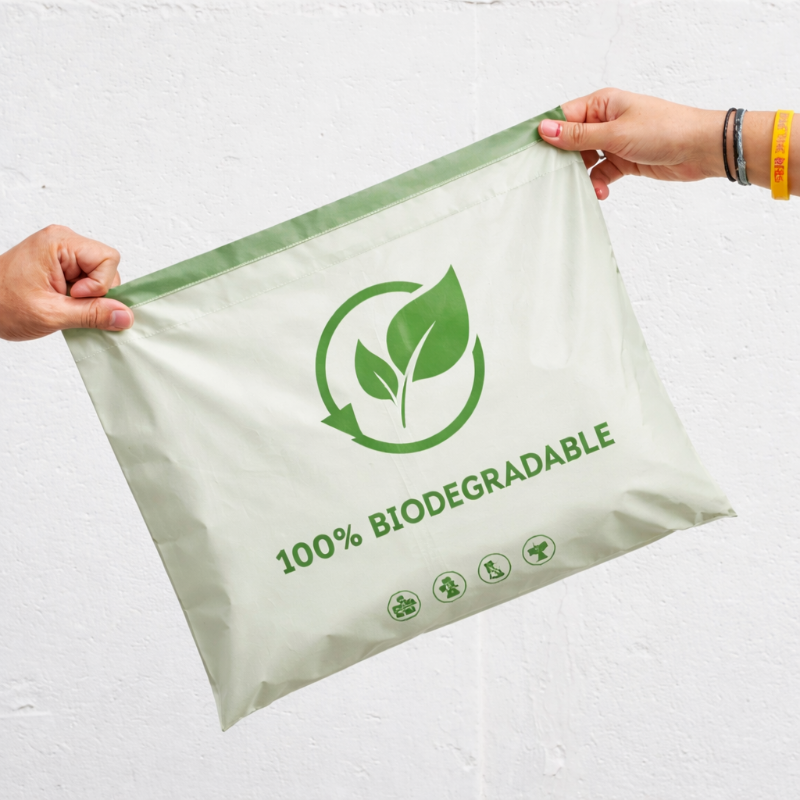
Biodegradable shipping bags:
- Decomposition under industrial composting conditions: 3–6 months.
- Manufactured to the customer's specified dimensions.
- Higher costs, but significant communication potential for premium brands or companies with a B Corp or ESG focus.
- Also available in a version with a handle, making it easier for customers to carry the parcel.
- Compostable packaging is manufactured in accordance with European standard EN 13432:2000, which was recognised as a harmonised standard under Directive 94/62/EC by European Commission Decision 2001/524/EC.
PCR (Post-Consumer Recycled) polythene mailing bags:
- They contain up to 80% plastic from post-consumer recycled material.
- They meet the PPWR requirements regarding the proportion of recycled material.
- They can be printed on, but please note that the print quality will not be as perfect as with conventional postal bags and may have a slight ‘grainy’ texture due to the properties of the recycled material.
Safety and specialisation
- BIOHAZARD medical waste bags are specialised packaging for hazardous and infectious waste, commonly used in laboratories, hospitals, doctors’ surgeries, veterinary practices, etc.
- Security bags – useful for transporting confidential medical records – the bag cannot be opened without leaving visible damage.
Bubble wrap in the cosmetics and medical sectors – how to choose the right type?
Bubble wrap is one of the most commonly used protective materials, but choosing the right type is more important than buyers might think when ordering it for the first time. Using the wrong weight or bubble size can lead to complaints, even though the wrap has been used.
Bubble weight and size – a practical guide for the Health & Beauty sector
Bubble wrap selection Grammage and application – a guide for the Health & Beauty sector
| Film type | Grammage | Application |
|---|---|---|
| Lightweight two-ply film | ~30 g/m2 | Wrapping plastic accessories and small flacons (perfumes, food supplements) |
| Standard two-ply film | ~55 g/m2 | Larger glass cosmetic products, lightweight devices, wrapping bottles |
| Three-ply film | ~80 g/m2 | Medical devices, monitors, heavier cosmetic equipment – number of wrapping layers depends on product weight |
| PE foam laminate | ~30 g/m2 + foam | Products requiring double cushioning, long-distance transit |
| FILL & WRAP | ~60 g/m2 | Large bubbles provide ideal void fill; good protection for heavier products |
← scroll to view the full table
Self-adhesive bubble wrap – when does it speed up packing by 30%?
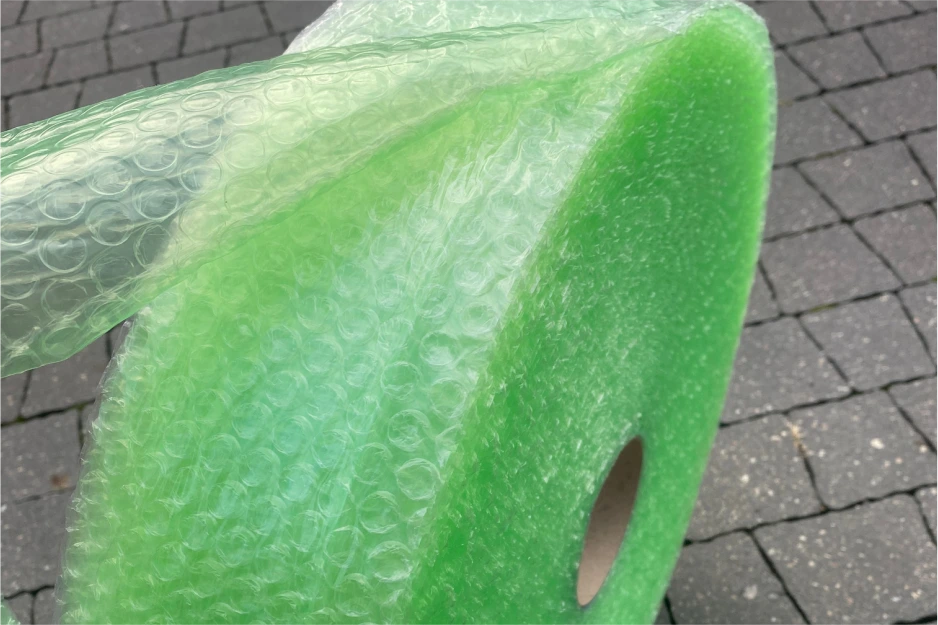
Standard bubble wrap requires adhesive tape to seal it – which means an extra step and additional material. Self-adhesive bubble wrap has a thin layer of adhesive on the inside – once the item is wrapped, the film ‘sticks’ by itself and does not slip around when packed in the box.
When is self-adhesive bubble wrap a cost-effective choice?
- For a daily packaging volume of more than 50 items.
- When packaging is carried out by staff with varying levels of experience (this helps to reduce errors).
- For products with irregular shapes that are difficult to wrap using standard film.
- If you want your packaging to look professional, the film won’t ‘slip’ on the product.
Self-adhesive bubble wrap leaves no permanent adhesive residue on the product surface – the adhesive is so mild that it does not damage the finishes or matt surfaces of premium cosmetic products. This solution should be tested on a product sample before being introduced.
Pre-cut packaging as a way to speed up the packing process
The speed of the packing process is one of the most important metrics in warehouse logistics – the faster parcels are packed, the more shipments can be sent to customers within a given timeframe. These days, delivery speed has a significant impact on the customer experience.
In addition to advanced automated packaging systems used in large companies, another way to optimise the packaging process is to … change the form of the material used (or even switch to a different material altogether). But let’s stick with the form – instead of a traditional roll of bubble wrap or PE foam, why not opt for pre-cut sheets?
- Bubble wrap or PE foam bags mean you no longer need to wrap the product in one or more layers of material – instead, simply place the product in the bag and seal it. If you choose the version with adhesive strips (available for bubble wrap), there is also no need to use scissors or tape.
- Sheets made from bubble wrap or PE foam allow products to be separated quickly using the same sections of material, without the need to cut the material to size.
- Bubble wrap tubes enable the efficient packaging of products of similar width but varying lengths, such as skirting boards. You simply slide the product into the tube and cut it to the required length.
Why do Mac-Graf’s customers prefer to use ready-made packaging?
- Speeding up the packaging process – it is easier to place a product into a bag or tube than to wrap it. Similarly, it is easier to remove a sheet or tear off a piece of material from a roll than to cut it to size. And the larger the company and the more demanding the customers, the more important delivery speed becomes.
- Standardisation of the packaging process – if employees are left to decide for themselves how much material to use when packaging a particular product, there is a risk of over-packaging, which incurs unnecessary costs, or under-packaging, which can lead to customer complaints and dissatisfaction. Pre-packaging helps to better control the amount of material used to secure an individual product.
- Reducing the cost of packaging materials – when standardised materials are used, it often becomes apparent that too much material was previously being used, and that less packaging material is consumed once the new packaging process has been introduced.
Examples of products from Mac-Graf’s ready-made range:
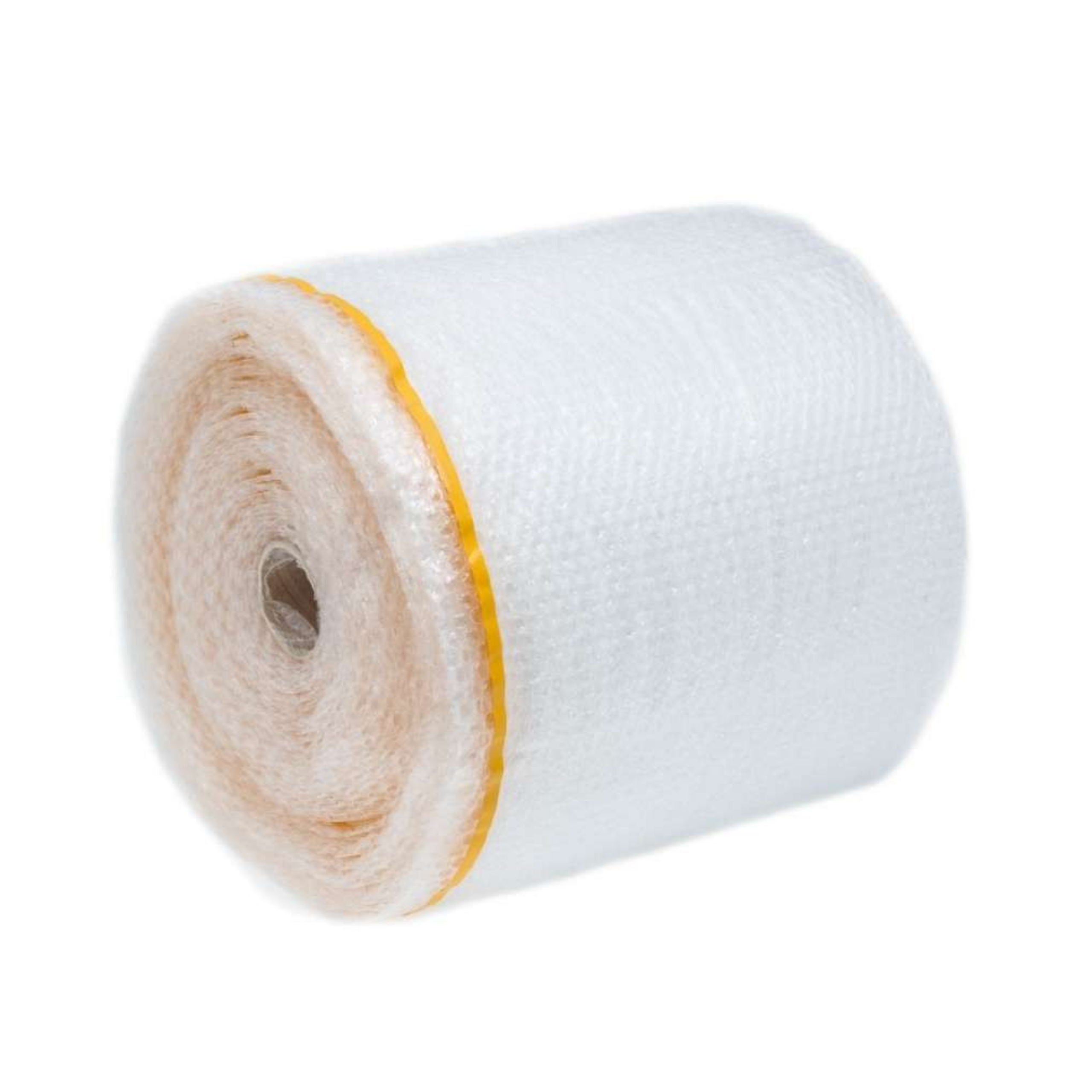
Bubble wrap bag
With or without adhesive strips. They speed up the process of packaging products of similar dimensions. Bespoke production.
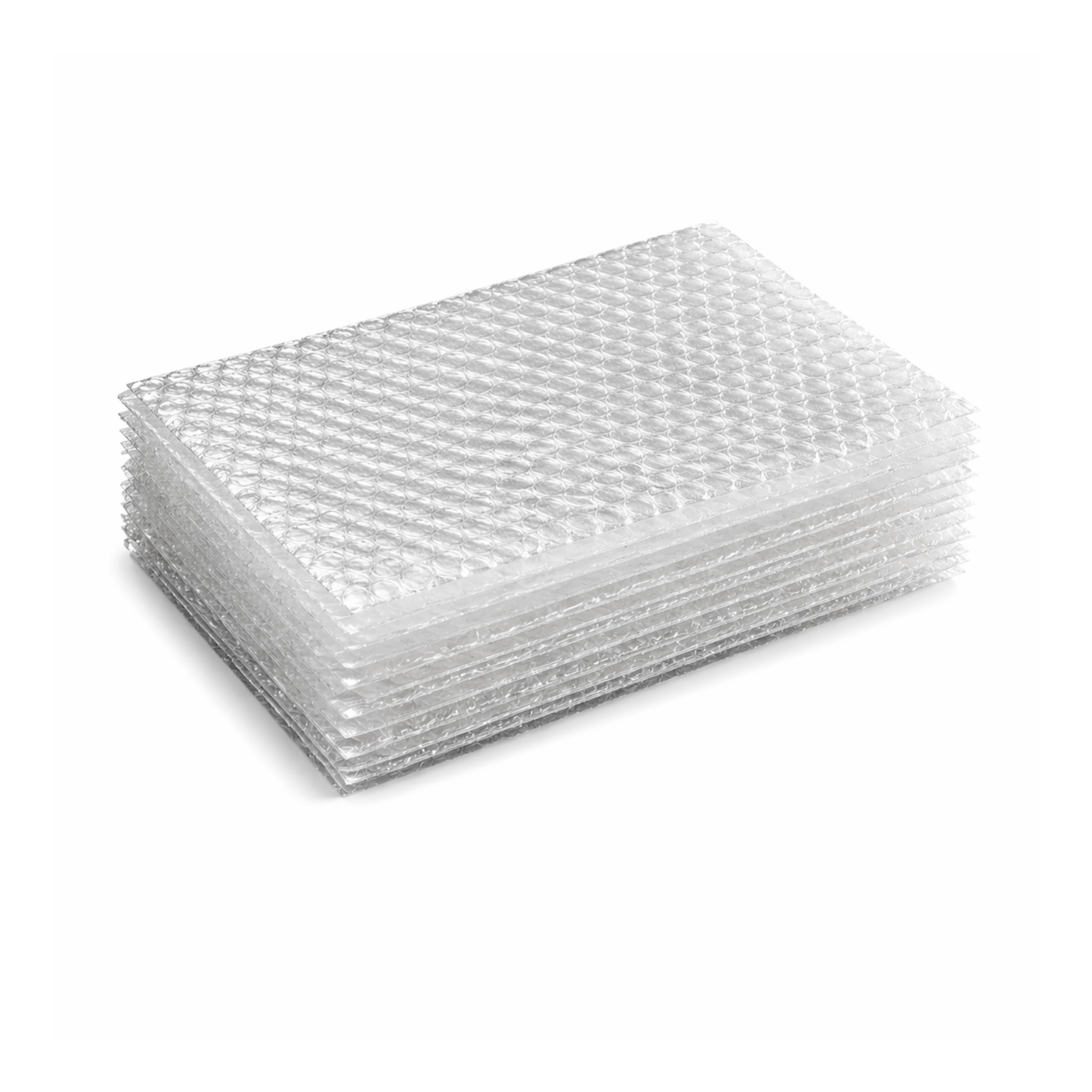
Sheets of bubble wrap
Bespoke design. They enable products to be separated quickly and the packaging process to be standardised.
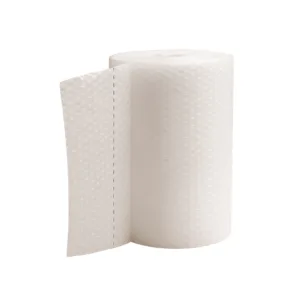
Perforated bubble wrap
The perforation allows sections of film of the same, pre-set length to be torn off the roll quickly. Ideal if there are dispensers at the packing station.
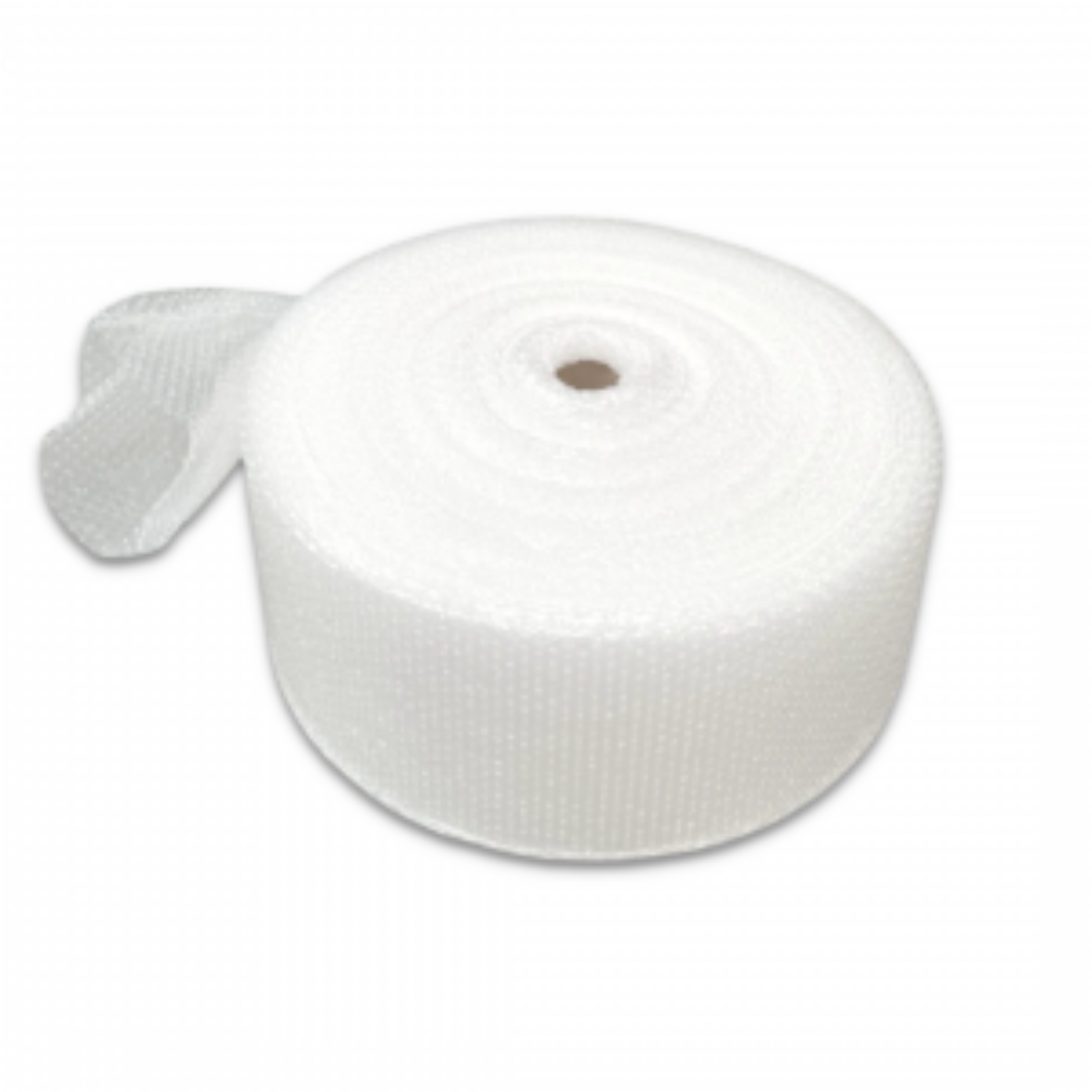
Tube made of bubble wrap
Makes it easier to pack products of similar width but different lengths. Reduces the amount of adhesive tape used.
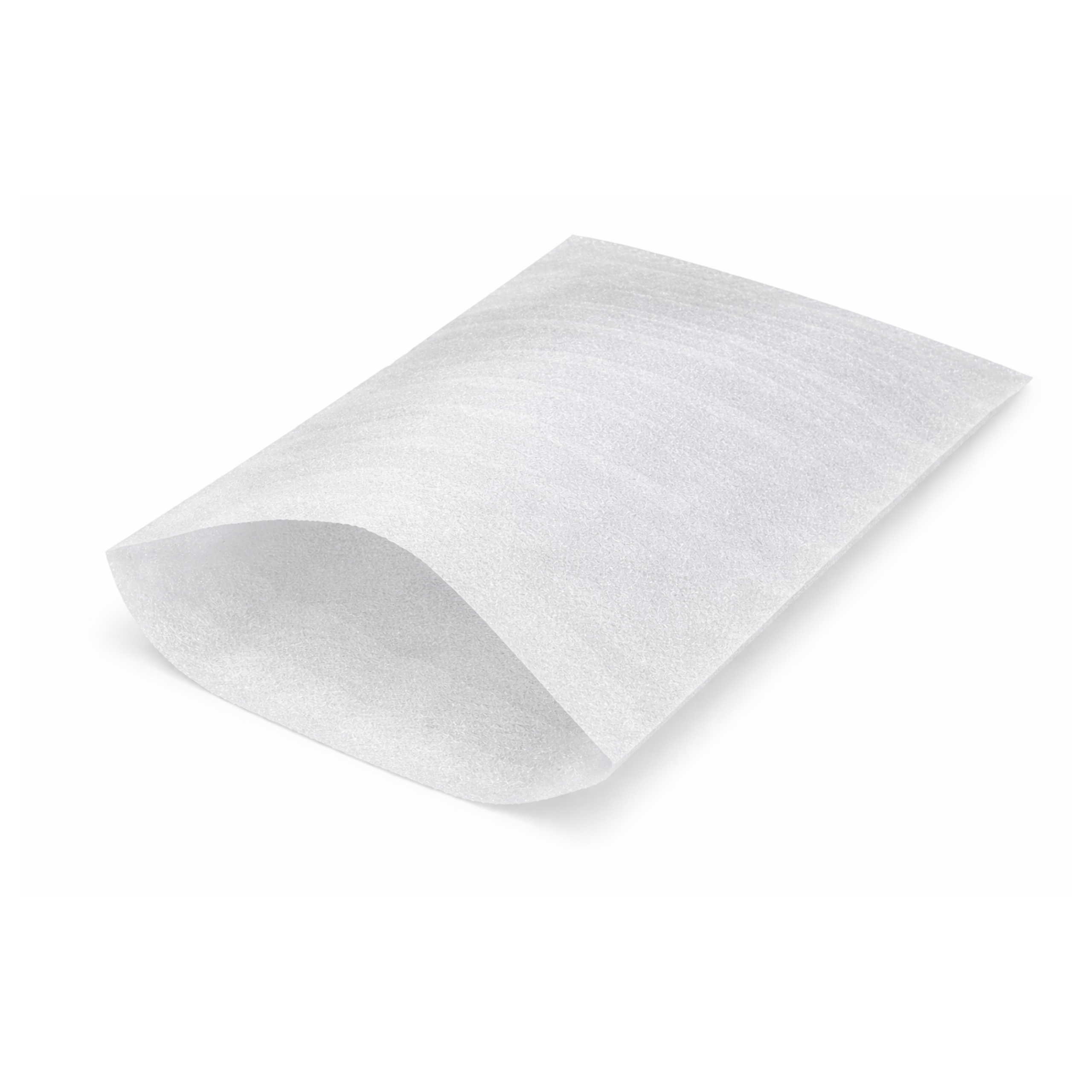
Polyethylene foam bag
They speed up the packaging process and reduce the amount of adhesive tape used. Bespoke production.
PPWR 2026 – what do buyers in the cosmetics and medical sectors need to know?
The PPWR (Packaging and Packaging Waste Regulation) will come into force in stages from 2025 onwards. This is not a one-off change, but a transformation of the entire packaging model over the next five years. The summary below covers only those provisions that affect companies in the health and beauty sector that order transport packaging.
How is the PPWR Regulation already affecting your business?
1. Limiting empty space in packaging
From 2030, the empty space in collective and transport packaging must not exceed 50% of the volume. If you currently use a box measuring 200×200×200 mm for a product that takes up only 40% of the volume, you will need to change the packaging. PE foam moulded parts, developed using the ‘right-sizing’ method, already solve this problem today.
2. Recyclability of packaging
All packaging placed on the EU market must be technically recyclable. PE foam (EPE and XPE) is fully recyclable and is accepted by most sorting facilities. Shipping bags containing post-consumer recycled (PCR) material meet the requirements regarding the proportion of recycled content.
3. Ban on certain single-use packaging
In the long term, the PPWR Regulation will restrict the use of plastic packaging for which there is no alternative. Biodegradable and home-compostable postal bags will be one of the acceptable solutions to this requirement.
Who is affected by the PPWR Regulation in the health and beauty sector?
A practical PPWR checklist for buyers of transport packaging:
- Does my supplier provide packaging with documented recyclability?
- Are the moulded parts/inserts designed in accordance with the right-sizing principle?
- Do the shipping bags come with a certificate regarding their PCR content or compostability?
- Can the supplier provide material documentation for audits?
- Has the weight of the packaging been optimised in terms of the proportion of empty space?

Frequently Asked Questions (FAQ)
What is the difference between EPE and XPE foam for packaging cosmetic products and medical devices?
EPE foam (expanded polyethylene) is soft and lightweight – ideal for premium cosmetic products and lightweight devices. XPE foam (cross-linked polyethylene) is denser, harder and more resistant to compressive stress – it is used in heavy medical devices that require precise positioning without the material deforming. The key factors in the selection process are the product weight and the required level of cushioning.
Antistatic foam is always required when the packaged product contains electronic components: integrated circuits, motherboards, control modules or sensors. Standard white PE foam can generate electrostatic charges when moved, which can damage sensitive components. Antistatic foam dissipates these charges to a safe level (below 100 V).
Yes, but only if the right packaging is chosen. A bubble-wrap envelope with 10–16 mm bubbles provides effective protection for glass bottles of up to approximately 200 ml during standard courier delivery. For heavier or higher-value products, we also recommend adding a polyethylene foam insert to the shipping envelope or using a cardboard box with a moulded insert.
Transport packaging that complies with the PPWR Regulation is packaging that is fully recyclable (PE foam, PE shipping bags containing post-consumer recycled material), made from recycled materials, or biodegradable (EN 13432 certified), and whose design minimises empty space. PE foam moulded parts manufactured using the right-sizing method automatically meet the requirement to limit empty space.
Self-adhesive bubble wrap is standard bubble wrap with a thin adhesive layer on the inside, which eliminates the need for adhesive tape. It leaves no permanent marks on the product surface and is safe for use on painted surfaces, matt finishes and cosmetic packaging. Compared to conventional bubble wrap, it speeds up the packaging process by around 30%.
Yes – BIOHAZARD bags are mandatory wherever infectious or sharp waste is generated: in beauty salons that carry out treatments involving a breach of the skin’s integrity (microneedling, tattoos, needle mesotherapy), as well as in dental and medical practices. The purchaser should check which bag colours are required for the relevant waste category in their facility.
The minimum order quantity depends on the complexity of the geometry and the chosen technology (CNC milling vs. waterjet cutting). Contact our consultant – for many standard geometries, we can offer cost-effective production runs starting from just a few dozen pieces.
The quickest ways to achieve this without major investment are to change the type of materials used – not the equipment itself:
For smaller cosmetic products – replace cardboard boxes with bubble-wrap pouches with adhesive strips. They do not need to be filled or sealed with tape, reducing the packing time per parcel by up to 30 seconds.
For larger products or glass sets – replace wrapping with cling film with custom-made bubble wrap bags. The employee places the product inside and seals the bag, rather than wrapping and taping.
For high-volume shipments – consider perforated sheets instead of roll material. The employee tears off a ready-made section without scissors or a tape measure, standardising the amount of material used and avoiding errors.
The optimal solution depends on your product range and shipping volume – if you would like to discuss your specific situation, book an appointment with a Mac-Graf consultant.
A cosmetics company that fails to comply with the PPWR Regulation exposes itself to significant financial and market-related consequences.A cosmetics company that fails to comply with the PPWR Regulation exposes itself to significant financial and market-related consequences. These sanctions are enforced by the national market surveillance authorities of the respective member states.
1. Financial sanctions and administrative fines
By 12 February 2027, member states are required to establish national provisions defining sanctions for infringements of the PPWR. These must be effective, proportionate, and dissuasive. For breaches of specific provisions (Arts. 24–29) — including prohibitions on certain packaging formats, void fill restrictions, or reuse targets — the regulation expressly mandates the imposition of administrative fines.
2. Sales prohibition, market withdrawal, and product recall
Where market surveillance authorities establish that cosmetic packaging fails to meet the requirements (e.g. it is not technically recyclable, has deficient technical documentation, lacks an EU declaration of conformity, or contains prohibited substances), they will initially require the company to take corrective action. Should the non-conformity persist and the company fail to respond, the authorities may order measures prohibiting the placing of such packaging on the market, require its withdrawal from the market, or even order a recall at the level of the end consumer.
3. Immediate obligation to carry out corrective measures at the company’s own expense
Where packaging is found to pose an environmental risk or to fail to meet the requirements — even on formal grounds, such as errors in the QR code used to support sorting — the company placing the packaging on the market is obliged to implement corrective measures to remedy the deficiency immediately and at its own cost.
Particular risk for the cosmetics sector (so-called “false bottoms”)
The regulation pays particular attention to the cosmetics sector in relation to packaging minimisation requirements (e.g. in cream jars). The use of double walls, false bottoms, and unnecessary layers in packaging whose primary purpose is to artificially inflate the perceived product volume is expressly prohibited and is treated as a breach of the minimisation principle.
A cosmetics company that places such non-compliant packaging on the market faces sales prohibitions and financial sanctions. Exceptions apply only in demonstrable cases where such a form is required for functional reasons, or where the packaging is protected by a registered design right or trade mark registered before 11 February 2025. An additional, natural consequence will be market blockage — retail chains and other distribution partners will refuse to accept goods in non-compliant packaging in order to avoid sanctions of their own.
We can help you and optimize the packaging process in your company
Make an appointment with our advisor

A marketing manager and content enthusiast passionate about creating materials that bring real value to the audience. She explores the world of packaging through the lens of actual customer challenges, drawing insights from conversations with business owners, buyers, and warehouse staff alike. Outside of work, she’s a fan of non-fiction books and gravel biking.