

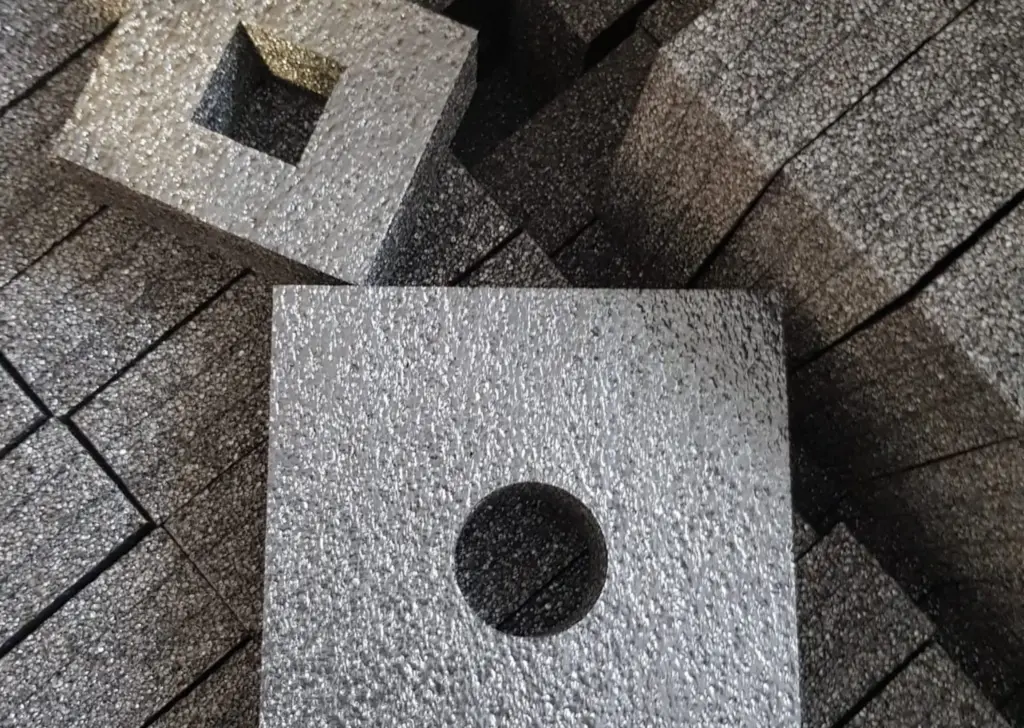
PE foam inserts, also known as formats or polyethylene (PE) foam inserts, are a class of lightweight, foamed polymer materials widely used in industry due to their closed-cell structure. This specific cellular composition gives them excellent cushioning, insulating, and void-filling properties in critical applications.
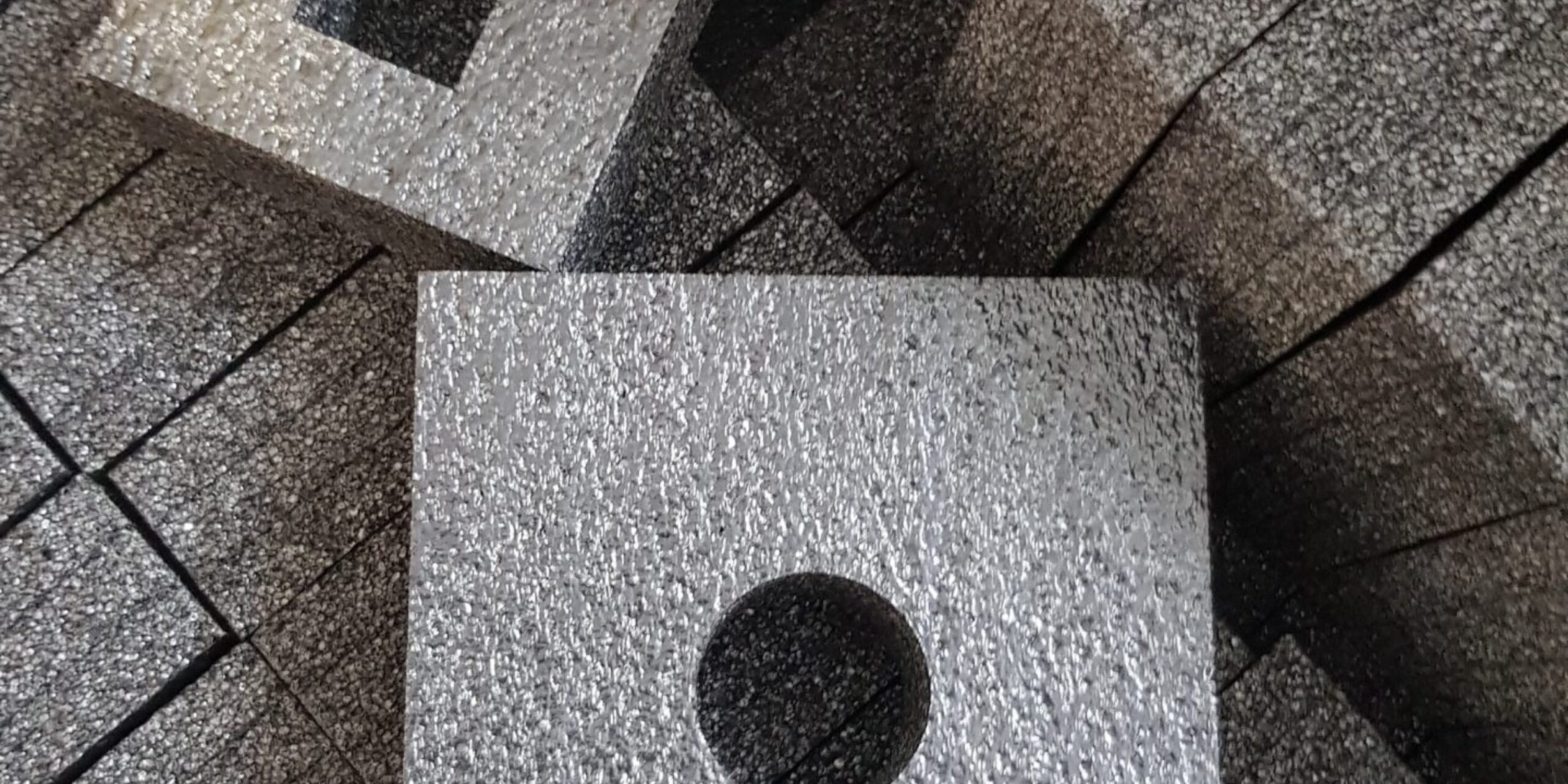
Polyethylene foams are highly versatile materials, available on the market in a wide range of forms. These include blocks, sheets, rolls, combs, profiles, and advanced, precision-cut designs. Foam inserts are manufactured using advanced processing methods such as milling, die-cutting, and molding. The thermal, insulating, and mechanical properties of PE foams make them essential across many industries—from packaging and construction to the automotive sector.
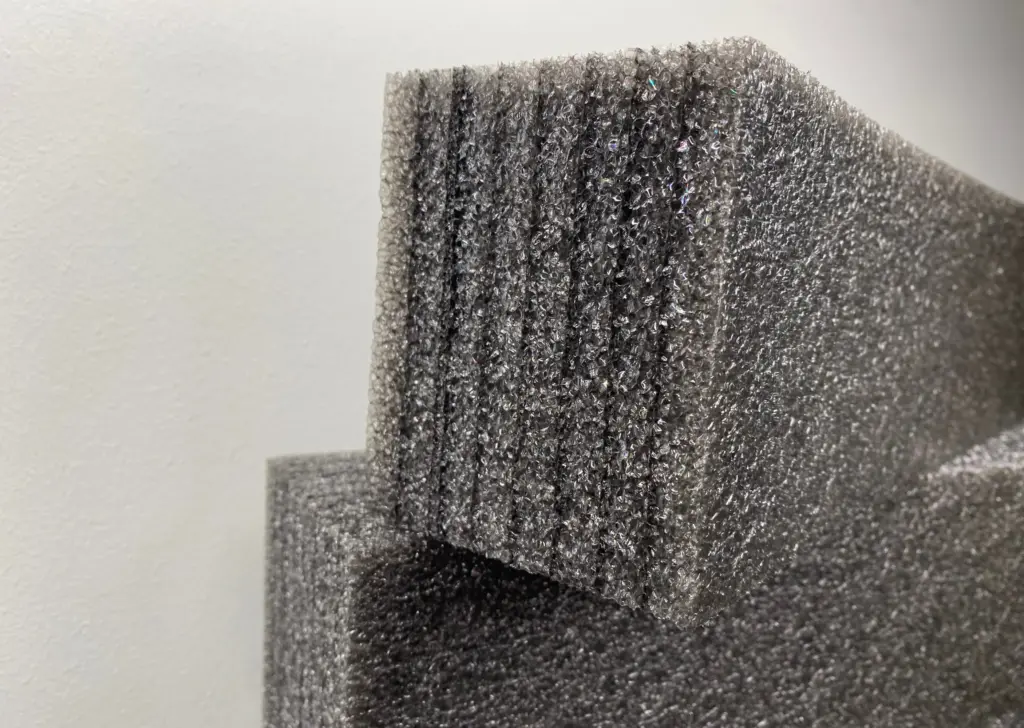
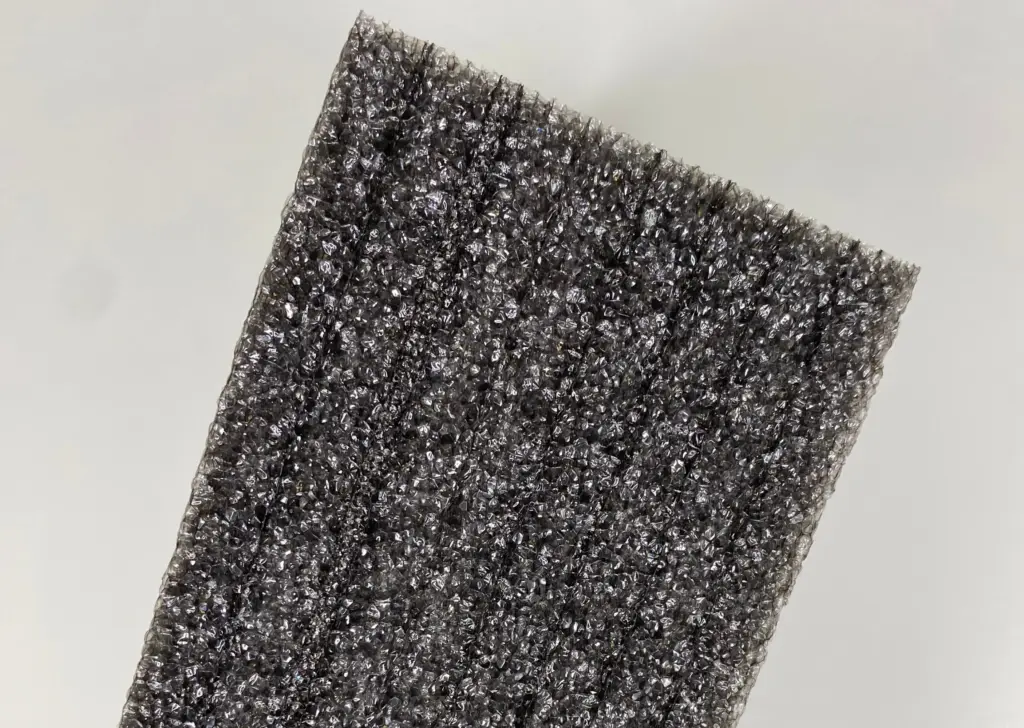
Physicochemical and functional properties of PE foam inserts
Polyethylene foam owes its popularity to a unique set of properties resulting from its tightly closed-cell structure, particularly characteristic of cross-linked variants. When these properties are combined with precise product fit in the form of custom inserts, PE foam becomes a highly reliable solution for protection during storage and transport—even for delicate items such as glass components.
Cushioning and mechanical strength
The key advantage of PE foam is its closed-cell structure, which provides very high resistance to water and moisture absorption. This property makes PE an ideal material for use in humid, marine, and outdoor environments, while also ensuring excellent buoyancy. Cross-linked variants (XLPE), thanks to their dense and sealed structure, are particularly resistant to mold and fungi, as they do not absorb moisture that promotes the growth of microorganisms.
Chemical and biological resistance
Polyethylene foams exhibit very good resistance to commonly used chemicals, including acids and alkalis. This chemical resistance is particularly valuable in sectors that require the use of aggressive substances, such as laboratory and medical industries. In addition, PE foams do not promote bacterial growth. This resistance is closely linked to the material’s closed-cell structure: the absence of open cells prevents moisture absorption and the retention of organic matter, both of which are necessary for the development of microorganisms. This physical barrier makes PE a key material for sterile medical packaging and marine applications.
Example of insert application in the Health & Beauty sector
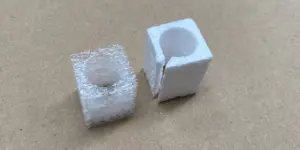
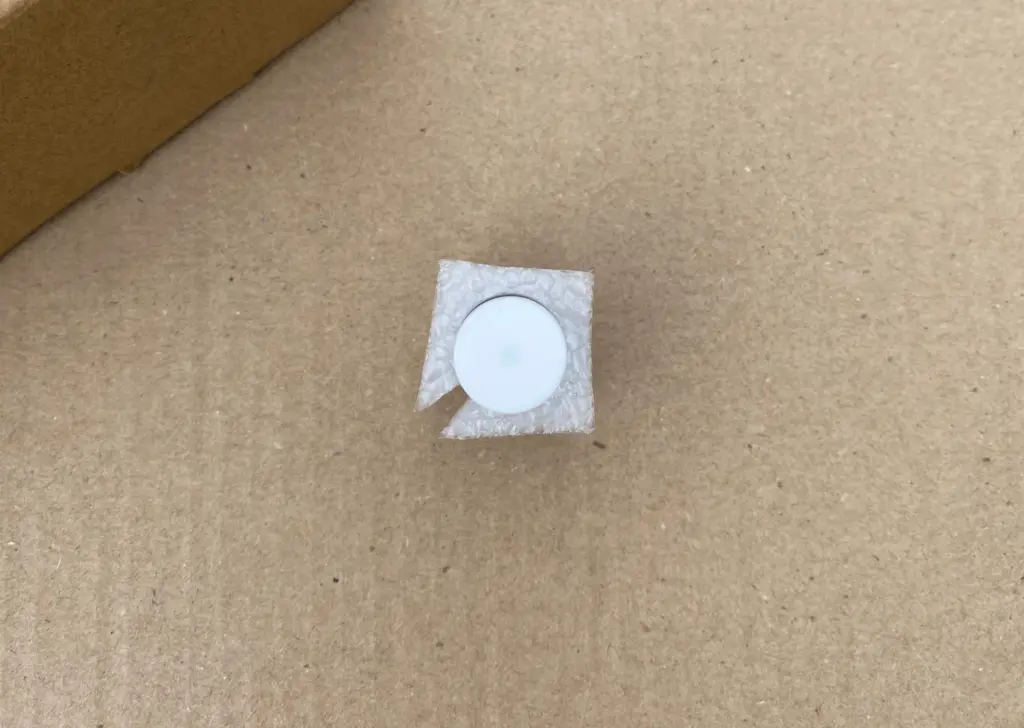
One of our clients producing dietary supplements sold in small glass bottles used polystyrene inserts for packaging. Unfortunately, these tended to crumble and were difficult to remove from the box. After consulting with our advisor, the client switched to precisely cut PE foam inserts tailored to the bottles. The result was easier material storage (due to improved durability) and more convenient placement of the bottles in the inserts (thanks to the foam’s flexibility).
Industry applications of PE foam inserts
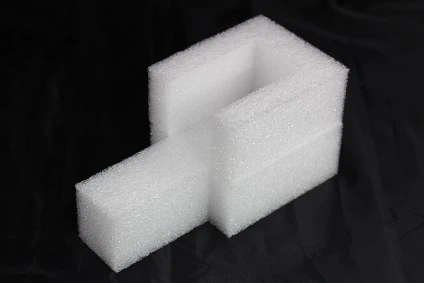
Transport and logistics (TSL)
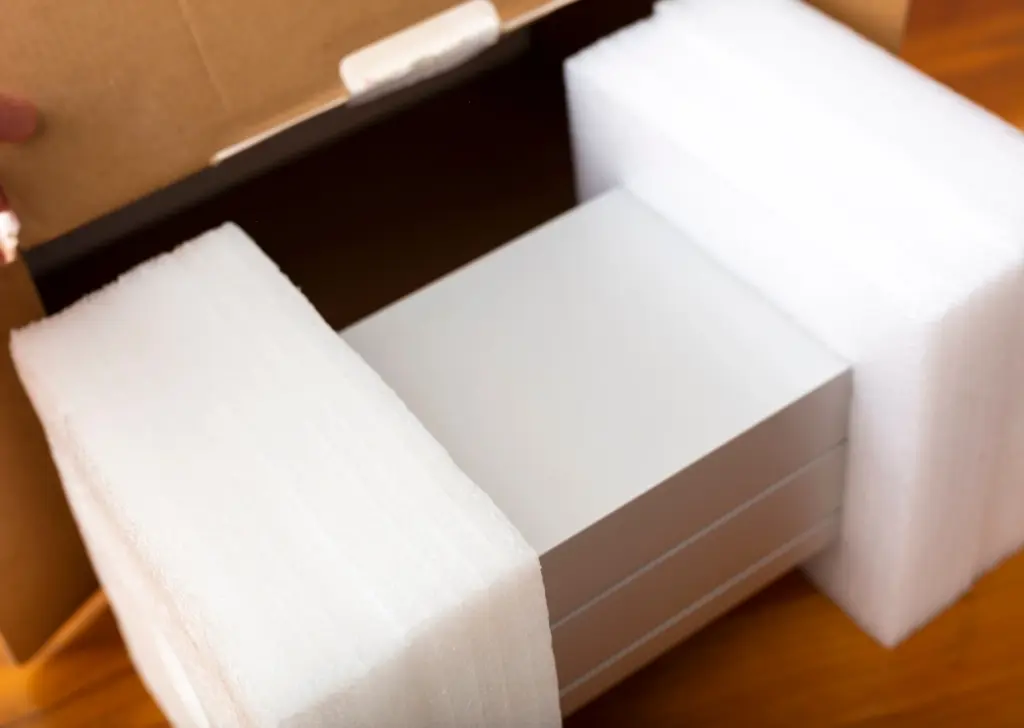
Polyethylene foam, especially XLPE, is widely used in the development of custom packaging solutions. Thanks to its ease of fabrication, PE foam inserts can be precisely designed to match the contours and dimensions of packaged products, ensuring a secure and stable fit within the packaging.
Industrial packaging
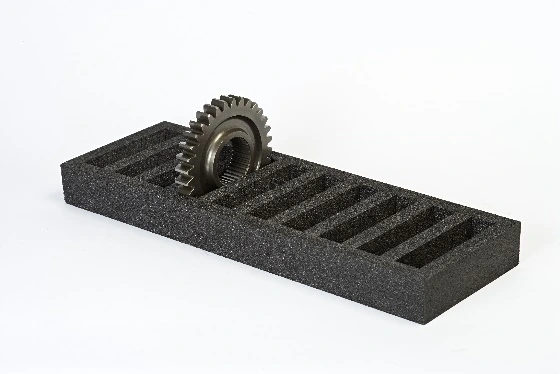
PE foam inserts are used for transporting high-precision measuring devices, delicate opto-electronic components, and for protecting heavy machinery and tools in sectors such as aerospace, military, and automotive. XLPE is preferred due to its excellent shock absorption, impact resistance, and vibration damping properties, which protect sensitive surfaces from scratches or damage during handling and transport.
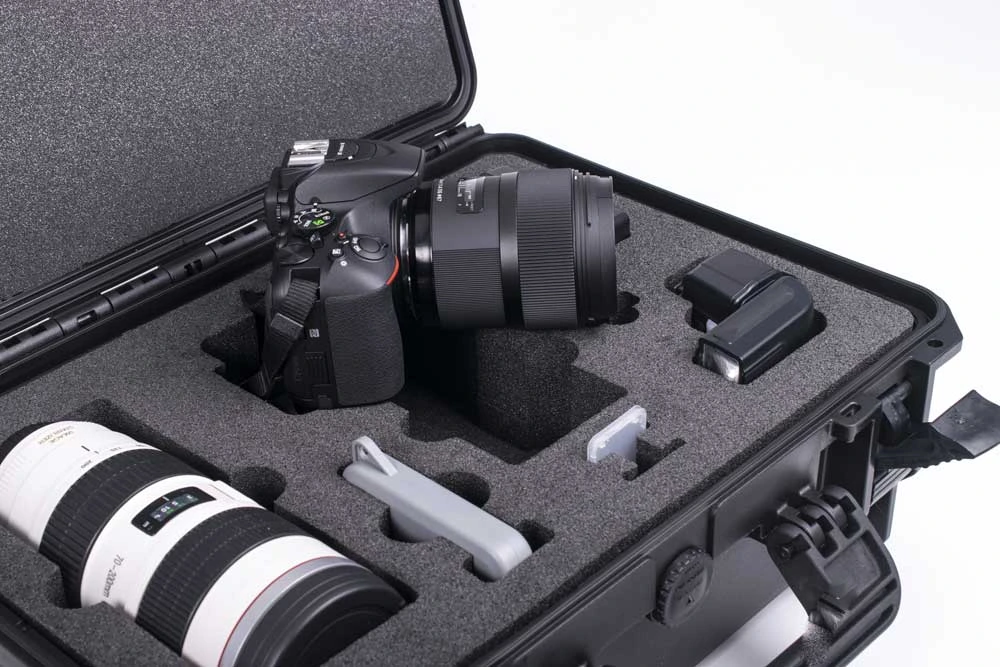
Electronics and IT industry
In the electronics industry, PE foam plays a key role in ensuring product reliability. These materials are ideal for cushioning delicate devices against impact forces during transport and storage.
ESD components
The use of anti-static (ESD) PE foam is essential for packaging and protecting sensitive electronics that can be damaged by electrostatic discharge.
Trays and dividers
PE foam is formed into trays and dividers that safely separate electronic devices, preventing movement and mutual damage.
Automotive sector
PE foams are an integral part of modern automotive engineering, contributing to both vehicle safety and efficiency.
Insulation and soundproofing
PE foam is used for thermal and acoustic insulation, for example to reduce engine noise and as splash protection. Lightweight foam materials help reduce the overall vehicle weight, which directly contributes to improved fuel efficiency.
Component protection (logistics)
In automotive supply chains, PE foam is molded to protect specific, delicate components such as headlights, mirrors, and precision engine parts, ensuring they arrive at assembly lines in perfect condition.
In the automotive context, material selection is strategic. PE foam is preferred where resistance to moisture, chemicals (e.g. in the engine compartment), and low, stable weight are required to optimize fuel efficiency. While polyurethane (PU) foam is commonly used in comfort components (such as seats and headrests), PE dominates in protective and insulating applications, as well as in environments where resistance to operating conditions is critical.
Construction and insulation
In the construction sector, PE foam, characterized by its closed-cell structure, is used as an effective insulating material.
Thermal insulation
It is used in the form of panels for insulating facades, roofs, and pipes.
Acoustic insulation
It is used for insulating floors and ceilings, as well as for sound reflection in vehicle headliners. Its high chemical and thermal resistance, combined with a uniform cellular structure, makes PE a durable insulation material.
Processing methods for foam inserts (cutting and bonding)
Precise processing and durable bonding of PE foams are essential for producing functional inserts.
Due to the need to maintain the integrity of the closed-cell structure, two main advanced numerically controlled (CNC) cutting methods are used.
Waterjet cutting
Waterjet cutting uses a high-pressure stream of water, sometimes enhanced with an abrasive material, to precisely cut foam. It is an ideal method for processing large volumes and sensitive materials such as XLPE.
Key advantages include:
- No thermal distortion – this is a cold cutting process that eliminates the risk of melting, burning, or deforming the foam, ensuring clean, burr-free edges.
- High precision and optimization – provides highly accurate cuts and allows for maximum material utilization.
The main limitation is that waterjet cutting allows cutting at a single depth (through the entire material). Therefore, if a design requires elements with different depths, it must be produced from separate layers.
CNC milling
CNC milling uses a computer-controlled rotating tool to cut foam according to a programmed path. It is the optimal choice for inserts requiring multiple cavities of varying depths, as it allows the entire part to be produced from a single, monolithic block of material. Maintaining structural continuity improves the strength of the final component.
It should be noted that CNC milling is only feasible for closed-cell foams such as PE. Vacuum tables used in CNC machines to hold the material do not work effectively with open-cell foams. Although milling is more expensive than waterjet cutting for large volumes, it is the best choice for small production runs and complex 3D geometries that require an intact material structure.
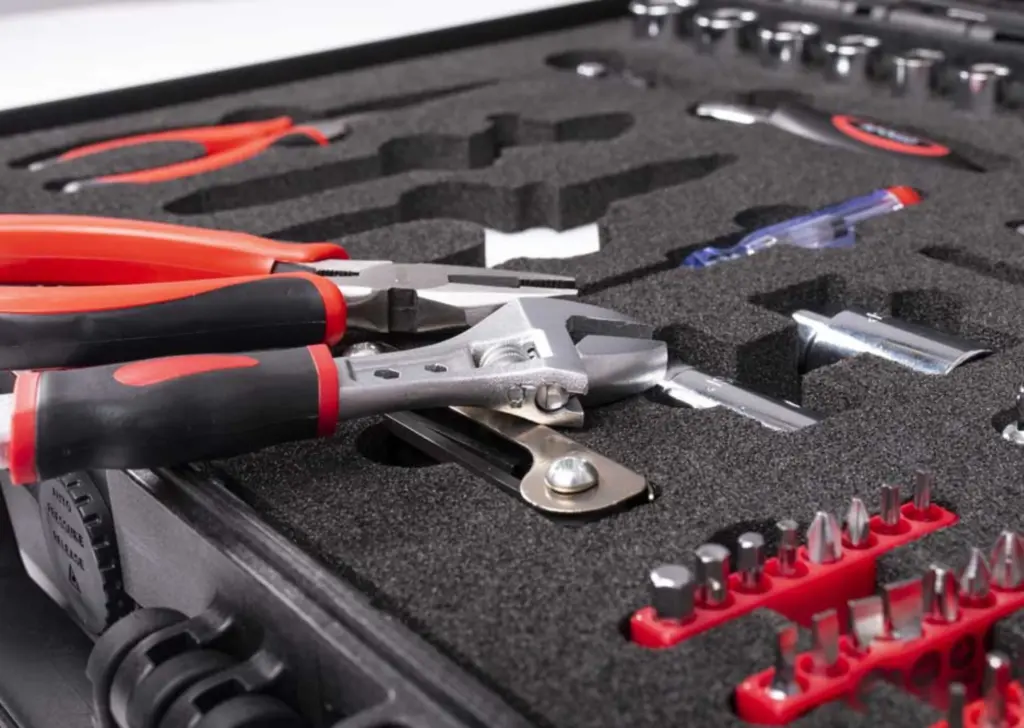
The choice of cutting technology determines the architecture of the protective insert. If the insert is designed to precisely hold a component and requires cavities of varying depths (e.g. in tool kits), CNC milling is the superior engineering solution. In contrast, for high-volume production of simple interlayers with clean edge quality, waterjet cutting is more cost-effective and enables faster order fulfillment.
PE foam bonding methods
Bonding polyethylene requires a specific technical approach due to its nature as a low surface energy plastic.
Surface preparation
Effective bonding requires thorough surface preparation. The surfaces to be joined must be dry, clean, and free from dust, dirt, or other contaminants that can significantly weaken adhesion.
- Abrasion (scrubbing/sanding) – preliminary abrasion, such as sanding, sandblasting, or using steel wool, is often necessary. Since polyethylene is non-polar and chemically inert, adhesives struggle to form strong chemical bonds. Abrasion deliberately increases surface roughness, maximizing mechanical bonding—allowing the adhesive to physically anchor into the material. This increases the contact area and significantly improves bond strength.
- Priming – the use of specialized primers can significantly improve both the initial and final adhesion of adhesives to plastics.
Recommended adhesives
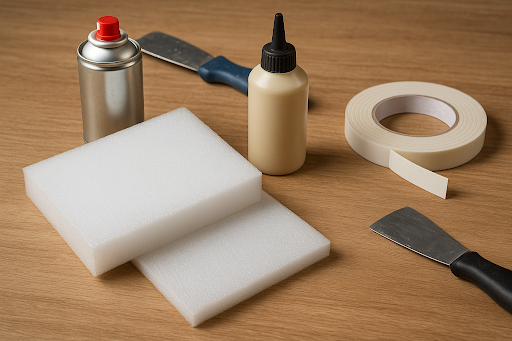
For bonding foam components to each other or to textiles, spray adhesives or hot-melt adhesives applied with a glue gun are commonly used. The key is to ensure even adhesive coverage on the bonding surfaces, followed by firm and stable pressure, which ensures a durable bond.
Summary
Polyethylene foam, in its two main variants (EPE and XLPE), is a strategic material in packaging engineering and industrial component design. The key to optimal use of PE foam inserts lies in consciously managing the balance between mechanical performance and lifecycle cost.
For engineers and logistics specialists, it is critical to optimize the balance between cost and protection. In low-cost, single-use packaging applications, EPE (non-cross-linked foam) is the optimal choice, as it offers low cost and is 100% recyclable. This makes it a favorable compromise from a sustainability perspective.
However, for high-value items, products sensitive to impact, or in returnable packaging systems, the key requirement is dynamic shock absorption without permanent deformation. In such cases, XLPE (cross-linked foam) becomes the material of choice due to its superior chemical and mechanical stability.
In terms of processing, the strategic selection of cutting technology is essential to maintain precision and cost-effectiveness in insert production. Ultimately, the success of PE foam applications depends on a deep understanding of how molecular structure (cross-linked vs. non-cross-linked) influences its behavior under exposure to moisture, chemicals, and dynamic loads—enabling the development of solutions that are both efficient and durable.
Answers to frequently asked questions
Due to its strength and stability, PE foam is sometimes used in specialized inserts or parts of mattress cores. However, because of its closed-cell structure—which limits airflow and effective moisture dissipation—it is rarely suitable as a full mattress core. To address this limitation, it is often combined with more breathable foam materials.
Polyethylene, as a low surface energy material, is considered difficult to bond. Proper surface preparation is essential, including cleaning and—where necessary—surface abrasion or the use of adhesion promoters (primers) to maximize mechanical bonding. In practice, specialized spray adhesives designed for foams or hot-melt adhesives are most commonly used.
Both waterjet cutting and CNC milling offer high precision. Waterjet cutting ensures the highest edge quality and no thermal distortion for 2D contours. However, CNC milling is the only method that allows for the creation of cavities and 3D features with varying depths from a single block of material, while maintaining structural integrity.
We can help you and optimize the packaging process in your company
Make an appointment with our advisor

A marketing manager and content enthusiast passionate about creating materials that bring real value to the audience. She explores the world of packaging through the lens of actual customer challenges, drawing insights from conversations with business owners, buyers, and warehouse staff alike. Outside of work, she’s a fan of non-fiction books and gravel biking.