

One of our clients in the sanitaryware and bathroom accessories sector approached us with a request to streamline the packaging process for toilet seats. The product was well protected, but the packaging process itself resulted in unnecessary waste of time and material, and made it difficult to monitor film consumption in the warehouse. The aim was not to change the protective material, but to improve the ergonomics and repeatability of the process. Bubble wrap bags made it possible to reduce the time taken to pack sanitary ware, standardise the process and maintain the same level of protection as roll film.
Starting point
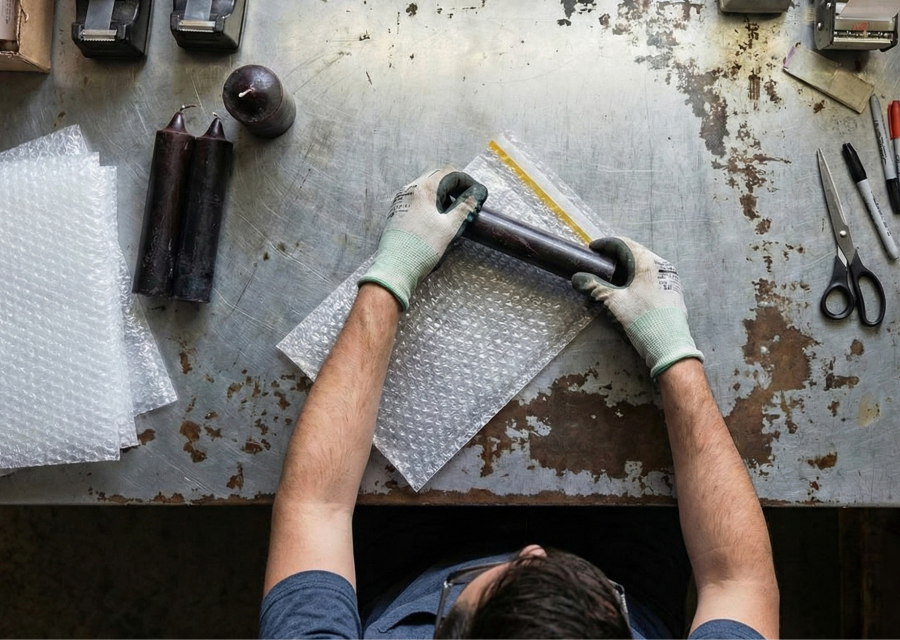
For years, the customer had been using bubble wrap on rolls, which warehouse staff would cut to size and fit around each toilet seat being packed. Although this solution provided adequate protection during transport, its shortcomings began to become apparent over time.
The most commonly reported problems are:
- the need to cut the film by hand each time it is packed,
- no repetition – each flap was wrapped slightly differently,
- difficulty in monitoring staff consumption of materials,
- a slower pace of work in the warehouse, particularly when dealing with larger volumes of shipments.
The process was well-suited in terms of product protection, but inefficient from an organisational perspective.
Our activities
Knowing that the problem wasn’t poor product protection, we focused on the movements performed by the warehouse worker. The biggest ‘bottleneck’ turned out to be the time taken and the repetitive nature of manually wrapping items with fairly regular shapes.
We suggested retaining the existing protective material, but in a different form:
bubble wrap bags, manufactured in a standard size that fits toilet seats of a similar size.
The solution included:
- tailoring the bag’s dimensions to a specific product,
- easy insertion of the lid into the prepared mould without any additional steps,
- retaining the same shock-absorbing properties as the roll-type film,
- standardisation of the amount of material used in each package.
The solution implemented
Standard bubble wrap on rolls has been replaced by bubble wrap bags, which:
- eliminate the need to cut the material,
- speed up the packing process – simply slip the product into the bag,
- ensure that every flap is secured to the same standard,
- make it easy to monitor stock levels.
Thanks to this solution, packaging has become a simpler, standardised process, independent of individual staff members’ experience.
Results following implementation
Shortly after the change, the client noticed tangible benefits:
- reducing the time taken to pack a single item,
- greater consistency and organisation in the warehousing process,
- better control over the use of bubble wrap,
- there is no need to replace the material, which has previously fulfilled its protective functions.
Importantly, the optimisation did not require a technological revolution or investment in new materials – simply changing the packaging format proved sufficient.
Summary
This example shows that optimising packaging does not always involve changing the raw material. Sometimes, simply using the same material in a different way is enough to significantly streamline warehouse operations, increase control over the process and improve packaging ergonomics.
In the case of sanitary ceramics, bubble wrap bags proved to be a simple yet highly effective optimisation tool – without compromising product safety.
We can help you and optimize the packaging process in your company
Make an appointment with our advisor
A marketing manager and content enthusiast passionate about creating materials that bring real value to the audience. She explores the world of packaging through the lens of actual customer challenges, drawing insights from conversations with business owners, buyers, and warehouse staff alike. Outside of work, she’s a fan of non-fiction books and gravel biking.